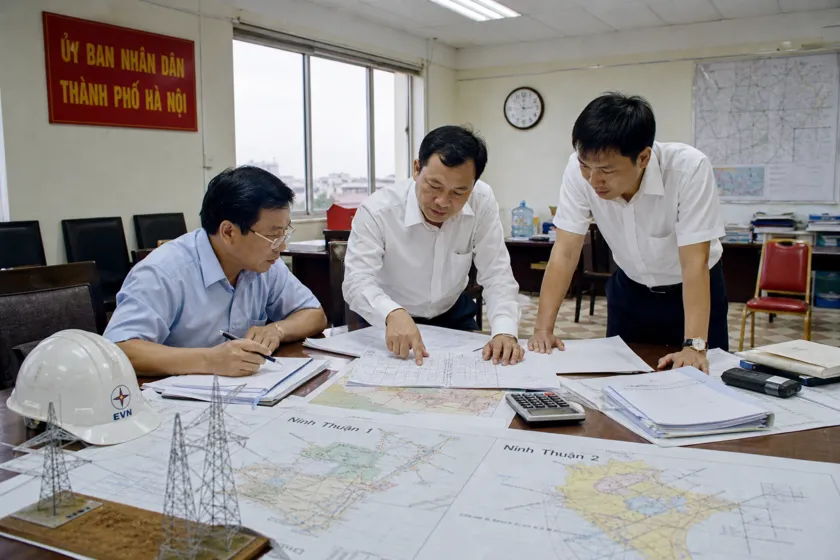
Vietnam is shifting from nuclear hesitation to nuclear acceleration. Nearly a decade after shelving its first nuclear project, Hanoi has reactivated the program with new political alignment and a clearer legal pathway. The revival centers on Ninh Thuan 1 and 2, framed as a strategic energy pivot with an estimated USD 22 billion investment attached to restarting these plants. The country’s return also reflects the timeline of earlier decisions: the first Ninh Thuan plan was approved in 2009, then suspended in 2016 due to fiscal constraints and public debt concerns. In late 2024, the National Assembly voted to restart the nuclear programme, marking a formal change in direction.
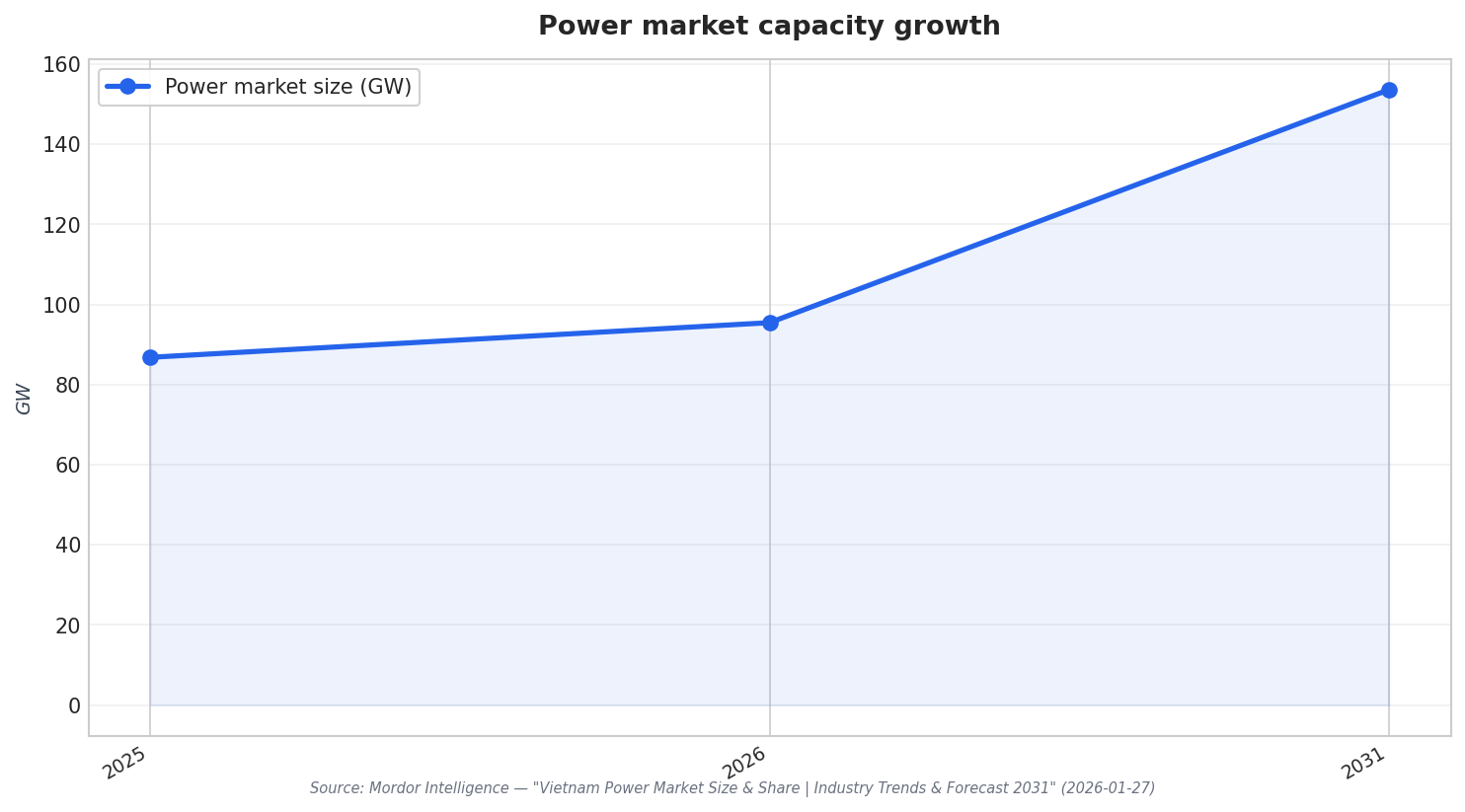
The demand-side argument is powerful, but it raises the stakes. One analysis cites projected electricity-demand growth of 12–14% annually and a requirement for generation capacity to triple by 2030 and expand sevenfold by 2050. At the same time, Vietnam has committed to Net Zero Emissions by 2050, pushing policymakers to seek firm, low-carbon options alongside renewables and LNG. Market forecasts reinforce the scale of the buildout: Vietnam’s power market is expected to grow from 86.81 GW in 2025 to 95.46 GW in 2026 and reach 153.62 GW by 2031, with a 9.98% CAGR over 2026–2031. These figures describe a system under pressure to add dependable capacity quickly.
Policy Reset and Timelines: Why the Comeback Looks Real
The comeback is not just rhetorical. In February 2025, Prime Minister Pham Minh Chinh instructed Vietnam Electricity (EVN) and PetroVietnam (PVN) to immediately advance construction of two nuclear power plants in Ninh Thuan, with a target completion by 2030. One outlook projects commissioning as early as 2031 and no later than 2035. The legislative backbone was strengthened on June 27, 2025, when the National Assembly passed an amended Atomic Energy Law with near-unanimous approval. Effective January 1, 2026, it replaces the 2008 framework and introduces lifecycle regulation of nuclear facilities, from site survey and design to operation and decommissioning, aligned with IAEA standards.
Nuclear is also being positioned inside a broader power-mix transition rather than as a standalone solution. The revised PDP8 implemented in April 2025 commits to USD 136.3 billion in investment by 2030 and—according to one summary—incorporates nuclear energy into the national structure for the first time. That same PDP8 source sets a 2030 installed-capacity target of 236 GW, with solar at 59 GW (25.1%) and wind at 21 GW (18 GW onshore plus 3 GW offshore). It also lists nuclear energy at 4–6.4 GW in the 2030 structure, with the first phase supported by technology of the Russian State Atomic Energy Corporation. Meanwhile, a separate market report notes renewables held 56.85% of Vietnam power-market share in 2025, underscoring how the nuclear plan must integrate into an already fast-evolving renewables-heavy system.
So is the Vietnam nuclear power revival an opportunity or a risk? It is both, because the same factors that make nuclear attractive also create delivery risk. Vietnam’s grid has faced bottlenecks: one market analysis says upgrades to the above 500 kV backbone are aimed at removing constraints that once stranded half of installed capacity and forced 2.56 billion kWh of imports from China in 2024. Execution depends on institutions, finance, and international cooperation. Trade.gov states Vietnam made nuclear power a strategic national priority in 2025 and notes a U.S.–Vietnam Section 123 civil nuclear cooperation agreement is already in place. The World Nuclear Association adds that Vietnam’s plans called for importing all fuel required for reactors and that a 2010 agreement with the USA expressed intent to rely on international markets for nuclear fuel supplies and not pursue domestic enrichment capabilities.
What projects are at the center of Vietnam’s nuclear comeback?
What is the timeline Vietnam is discussing for completion and commissioning?
What legal changes support the nuclear restart?
How does PDP8 describe nuclear capacity in the 2030 power structure?
What are the key risks and dependencies in the Vietnam nuclear power revival?