Vietnam’s halal push is being framed as more than a niche food play. Officials and experts describe halal as an economy that spans food, beverages, pharmaceuticals, cosmetics, tourism, logistics, finance, and digital services. At the Halal Business Conference 2026 in Singapore, Vietnam’s Ambassador to Singapore Tran Phuoc Anh said the halal economy serves nearly 2 billion Muslim consumers worldwide, with an estimated size of over USD 7 trillion annually. In another estimate cited by Vietnam’s Trade Promotion Agency, the global halal economy is estimated at USD 2.5–3 trillion annually and is forecast to reach around USD 10 trillion by 2028. The shared message is clear: demand is rising across Southeast Asia, the Middle East, and also Europe, Africa, and North America.
For Vietnam, the export logic is direct. Tran Phuoc Anh said Vietnam identifies halal industry development as a strategic opportunity to diversify export markets and enhance supply chain resilience. Vietnam has issued a National Strategy on strengthening international cooperation to develop the halal industry by 2030, alongside efforts to improve certification capacity and production systems to meet halal standards. Ho Chi Minh City has also promoted trade with halal markets, focusing on the Middle East. VietnamPlus reported that in the first 11 months of 2025, Vietnam’s exports to the United Arab Emirates reached USD 5.4 billion and to Saudi Arabia USD 1.9 billion, with mobile phones and components accounting for nearly 35% of total export value, alongside electronics, footwear, textiles and garments, cashew nuts, seafood, vehicles, and agricultural products.
From Certification to Value Chains: Where the Strategy Succeeds or Stalls
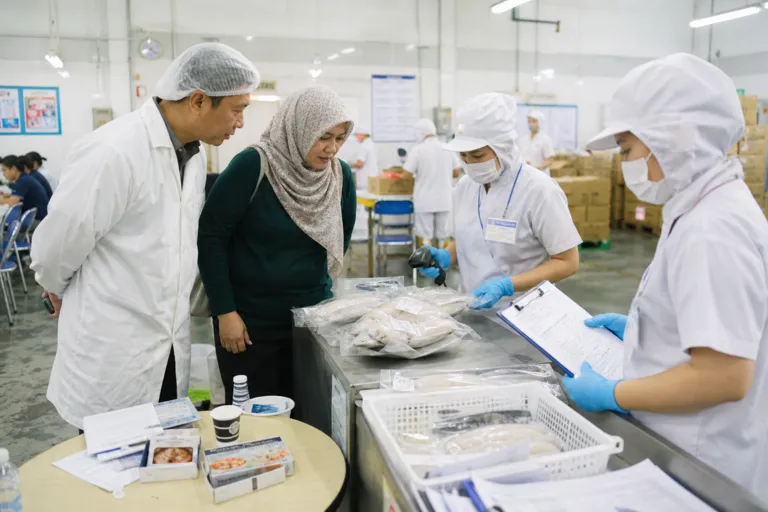
Executing the Vietnam halal export tourism strategy requires the “ecosystem” to work end to end, not just a label on a box. VietnamPlus noted experts’ concerns that many enterprises still view halal as merely certification, even though halal standards govern raw materials, production, logistics, and distribution. It also reported Vietnam lacks an integrated halal value chain, with fragmented sourcing, processing, warehousing, logistics, and certification systems. Yet the export upside is repeatedly emphasized. VietnamPlus highlighted product fit in rice, coffee, cashew nuts, pepper, seafood, processed fruits and vegetables, and packaged foods. It also pointed to Middle East import dependence, noting the region imports 85–90% of its food demand, while another VietnamPlus report said GCC countries import about 85% of their food needs.
Global market context strengthens the case for upgrading systems now. Precedence Research calculated the global halal food market at USD 3.30 trillion in 2025 and projected it could reach around USD 10.42 trillion by 2035, with a CAGR of 12.19% from 2026 to 2035. It also stated Asia Pacific held the highest share at 45% in 2025. VietnamPlus separately cited a projection that the halal food sector could grow from more than USD 2.71 trillion in 2024 to over USD 5.91 trillion by 2033, with an average annual growth rate of about 9%. B-Company added a Vietnam-specific datapoint: in 2024, exports of halal goods to the Middle East & Africa reached nearly USD 700 million, while Vietnam currently exports only about 20 commodity types to halal markets, implying room to broaden the basket.
Tourism is the other half of the bridge, and Vietnam is starting to market it explicitly. Tran Phuoc Anh said Vietnam will host the Halal Tourism Conference themed “Vietnam – A New Destination for Muslim Tourism” on July 8–9 in Khanh Hoa province. The Asian Affairs described a wider “Vietnam Halal ecosystem 2026” plan aimed at becoming a leading destination for Muslim tourists and a major exporter of certified products, noting visible hospitality changes in cities such as Da Nang, Ho Chi Minh City, and Phu Quoc. B-Company similarly observed hotels and restaurants offering halal-certified dining, prayer facilities, and separate dining areas for Muslim guests. Taken together, the export pipeline and tourism upgrades point to one integrated play: build trust through standards, then convert that trust into repeat trade and travel.
How big is the global halal economy, based on the cited sources?
What export results does Vietnam have in Gulf markets according to VietnamPlus?
What are the main obstacles to building a Vietnam halal export and tourism strategy?
What evidence suggests Vietnam has room to expand halal exports?
What tourism actions are linked to Vietnam’s halal push?