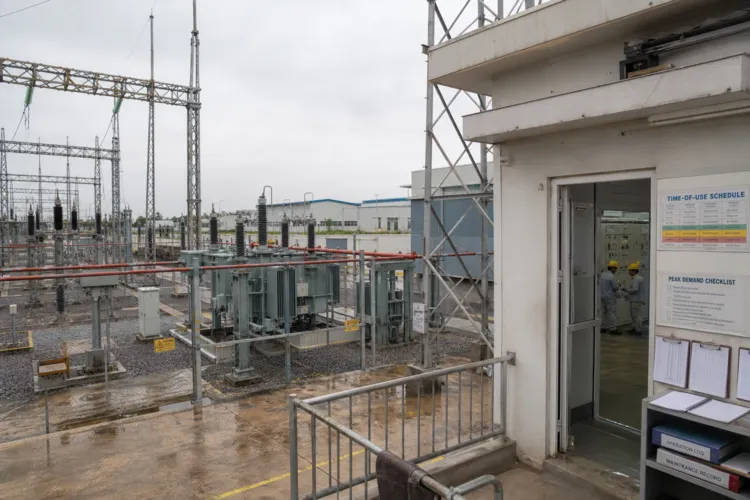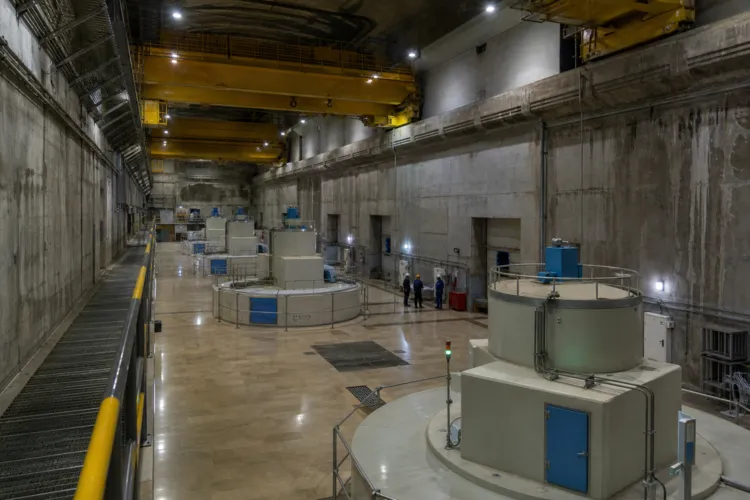
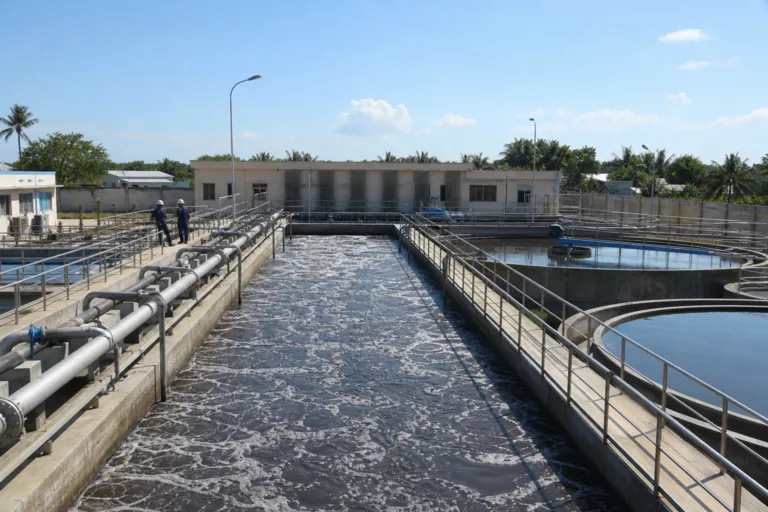
Vietnam’s water supply and sanitation story mixes progress with pressure. Wikipedia notes major gains in access between 1990 and 2010, nearly universal metering, and increased investment in wastewater treatment since 2007. Yet the same source lists persistent challenges, including widespread water pollution, poor service quality, low access to improved sanitation in rural areas, and insufficient cost recovery for urban sanitation. Financing is also getting harder. As the economy grows, foreign grant and soft-loan funding is described as declining, with donors shifting toward loans. That funding shift matters because infrastructure upgrades are increasingly complex, and the need to keep systems running sustainably is already a challenge.
Capacity constraints show up clearly in treatment and discharge. AAK reports that Vietnam’s wastewater treatment capacity of about 1 million cubic meters per day is not enough to handle the amount of wastewater generated. On the industrial side, Wikipedia states that industrial zones discharge 1 million cubic meters of untreated sewage per day, about 70% of all industrial wastewater. The pollution burden extends beyond large zones. Wikipedia also highlights “craft villages,” noting there are 700 in the Red River Delta alone and that an analysis by the University of Technologies and the Ministry of Science and Technology found 100% of wastewater samples taken from craft villages exceed allowed pollution levels. These figures help explain why the funding debate is urgent rather than abstract.
Where the Money Will Come From: ODA, Loans, and PPPs
Vietnam’s funding model is evolving as needs rise. AAK says large-scale water treatment projects have relied heavily on Official Development Assistance (ODA) from Japan (JICA), Korea (KOICA), and the Asian Development Bank (ADB), but that the government is now looking to reduce reliance on ODA and actively attract foreign investment through public-private partnerships (PPPs). Technavio frames PPPs as increasingly crucial for extensive upgrades in water and wastewater management, and it gives a Vietnam-specific example: in April 2025, SUEZ secured a 30-year PPP in Vietnam to design, build, and operate the Thu Duc Water Resilience Plant, described as a major wastewater treatment and recycling facility. The move toward PPPs is not just about capital; it also signals a push for long-term operations and performance accountability.
Loans and public investment remain part of the pipeline. Wikipedia notes that 8 industrial zones would be equipped with wastewater treatment plants with the help of a USD 50 million World Bank loan approved in 2012. It also reports plans to construct 30 wastewater treatment plants in the Mekong Delta until 2020, including 13 plants for domestic wastewater and 17 for industrial wastewater, in Can Tho and An Giang, Kien Giang, and Ca Mau provinces. In the biological treatment segment, a Ken Research report describes high initial investment costs, often exceeding USD 600,000 for small to medium-sized plants, and also cites an opportunity tied to government planning to invest USD 1.8 billion in wastewater infrastructure by future. Together, these points illustrate why Vietnam water wastewater infrastructure funding is increasingly a mix of public budgets, multilateral loans, and private capital.
Climate and governance trends add more urgency to investment decisions. Trade.gov notes that typhoons, floods, droughts, and landslides frequently threaten a high proportion of Vietnam’s population and economic assets along its long, densely populated coast. It also reports that on March 1, 2025, Vietnam merged MONRE with MARD into the new Ministry of Agriculture and Environment (MAE), consolidating responsibilities for land, water, environmental protection, climate change, and disaster management to streamline oversight. Meanwhile, technology providers see broader momentum. Mordor Intelligence estimates the global water and wastewater treatment technologies market at USD 65.15 billion in 2025, reaching USD 87.60 billion by 2030, with Asia-Pacific holding 34.87% of 2024 revenue. For Vietnam, the takeaway is practical: bigger risks and bigger systems require faster, better-coordinated financing, procurement, and operations.
Why is Vietnam struggling to keep up with wastewater treatment needs?
What is pushing Vietnam toward PPPs for water projects?
What does the evidence say about pollution in craft villages?
What financing examples exist for industrial wastewater treatment upgrades?
What are the main cost barriers in Vietnam’s water and wastewater infrastructure build-out?