
Vietnam’s construction upswing is strengthening the case for renting over buying. GlobalData expects the Vietnamese construction industry to grow by 8.9% in real terms in 2026, supported by more public and private investment in energy, industrial, and transport infrastructure projects, alongside higher inward foreign direct investment (FDI). That kind of momentum tends to create uneven, project-by-project equipment needs. For contractors, short mobilization windows and shifting work fronts make ownership harder to optimize. In that environment, Vietnam’s construction equipment rental market benefits from a simple value proposition: access the right machine for the job, for the right period, without locking capital into underutilized assets.
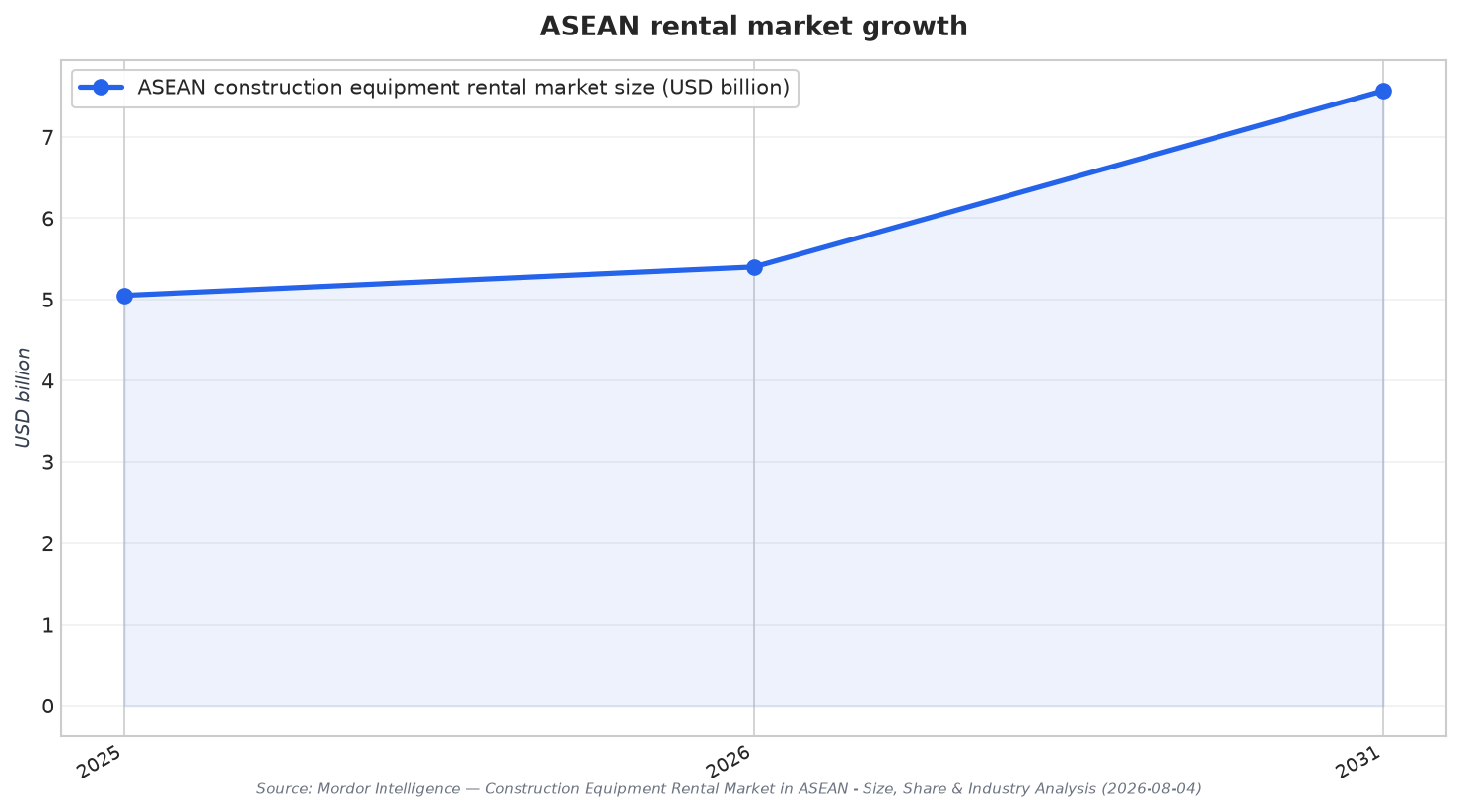
Regional benchmarks reinforce why the model is gaining traction. Mordor Intelligence values the ASEAN construction equipment rental market at USD 5.05 billion in 2025 and estimates growth from USD 5.4 billion in 2026 to USD 7.57 billion by 2031, a 6.98% CAGR during 2026–2031. Within that same ASEAN view, Vietnam is expected to lead growth at a 7.16% CAGR through 2031. The report ties utilization to infrastructure pipelines, contractors’ preference for asset-light operating modes, and the ability for rental firms to bundle machines with operators and maintenance. It also highlights telematics-enabled usage pricing as a way rental companies can monetize fleets more precisely across changing project demands.
Megaproject Demands Are Reshaping What Gets Rented
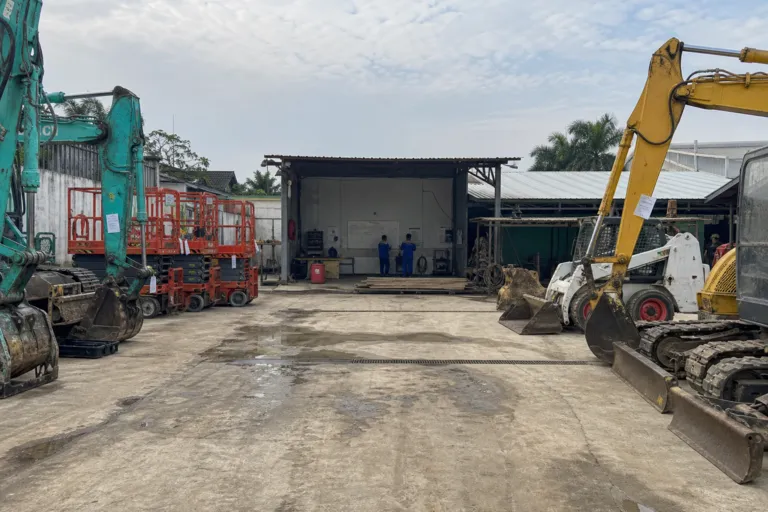
Equipment mix matters when megaprojects dominate scheduling. In the ASEAN rental market, earthmoving equipment led in 2025 with a 46.05% revenue share, showing how much early-stage civil work pulls in excavators, loaders, and related fleets. Infrastructure end users also held a 38.10% share of ASEAN rental demand in 2025, pointing to the central role of transport and utilities builds in keeping machines working. At the same time, rental duration skews short: contracts under six months accounted for 62.60% of ASEAN market share in 2025. That pattern aligns with how large projects often break down into multiple packages and phases, where contractors need capacity fast and then release it just as quickly.
Cost and modernization pressures add another push toward rentals. Maximize Market Research notes that the high upfront cost of excavators, cranes, loaders, bulldozers, and other heavy machinery—combined with fuel, maintenance, spare parts, insurance, and depreciation—raises the total cost of ownership. It says this is encouraging small and medium-sized contractors to consider rental and leasing instead of direct purchases. Mordor’s ASEAN lens also shows today’s fleets are still largely conventional: internal combustion drives held a 72.40% share in 2025, while electric drives are projected to grow at a 7.04% CAGR through 2031. As electrification and telematics spread, renting can become a lower-risk way to access newer specs without betting on one technology path.
Zooming out, global scale and growth expectations suggest rental is not a niche solution. The Business Research Company puts the global construction equipment rental market at $109.81 billion in 2025 and expects it to reach $142.91 billion in 2030 at a 5.4% CAGR. While those figures are global, they help explain why international incumbents and regional specialists both invest in fleet tools and service models. For Vietnam construction equipment rental specifically, the near-term story is about execution: pairing fast infrastructure rollouts with short-term availability, turnkey contracts that include maintenance and operators, and pricing approaches informed by data. If megaproject schedules keep moving, rental’s flexibility stays in the driver’s seat.
Why are contractors in Vietnam leaning toward equipment rental instead of buying?
How fast is Vietnam expected to grow within ASEAN’s equipment rental market?
Which equipment types and end users dominate rental demand in ASEAN?
Are short-term rentals or long-term rentals more common?
What does the global construction equipment rental market look like in size and growth?