

Vietnam’s push for electronic records is moving from “pilot projects” to a hard operational deadline. Under the National Digital Transformation Program (Decision 749/QĐ-TTg), healthcare is a top-priority sector, with targets that include 100% of healthcare facilities adopting electronic health records (EHR), e-prescriptions, and cashless payments by 2025. Multiple market analyses also frame this as a 2025–2026 compliance window for EHR implementation. For hospitals, the practical takeaway is simple: the Vietnam electronic health record EHR mandate forces near-term investment in hospital information systems, data capture workflows, and integration capabilities that can hold up under audit, reimbursement needs, and daily clinical use.
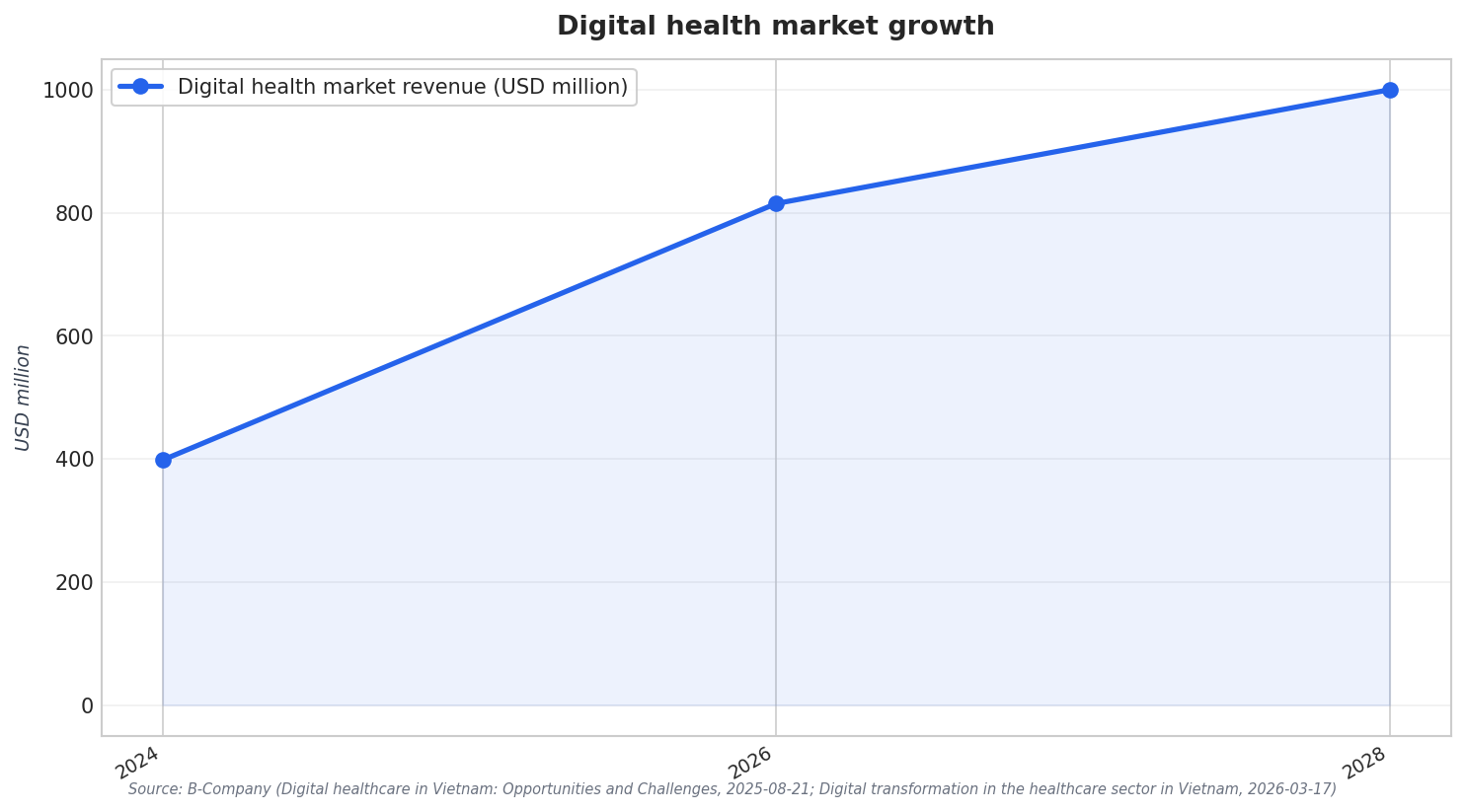
The deadline lands in a system under visible strain. Vietnam serves over 100 million people with around 1,645 hospitals nationwide, including 384 private hospitals. That pressure is one reason digital tools like telehealth, remote consultation, and digital pharmacy solutions are being pulled into the care pathway. The broader digital health market context reinforces why vendors and investors are paying attention. One source values Vietnam’s digital health market at USD 398 million in 2024 with a projected CAGR of 11.45% through 2030, while another estimates revenue reaching about USD 815 million in 2026 and growing to USD 1 billion by 2028 at a CAGR of 5.31%. Hospitals should read these numbers as a signal of accelerating procurement activity and a more competitive vendor landscape.
Operational Impact: Budget, Systems, and Interoperability
The mandate is backed by money, but spending effectively is the hard part. Sources cite a government commitment of up to VND 30,000 billion (about USD 1.26 billion) to accelerate healthcare digitization, including EHR and related infrastructure modernization. Yet adoption is not uniform. B-Company notes limited data interoperability and insufficient digital infrastructure at primary healthcare facilities, and calls the 100% EHR target “highly ambitious.” It also highlights that many district and rural hospitals may lack resources to maintain costly on-premises server infrastructure, which can make sustainability difficult without shared cloud-based health platforms. For hospital executives, the EHR program is therefore a multi-year operating model decision, not only a one-time software purchase.
Interoperability and supplier selection are already friction points. Vietnam News reports that many provinces face difficulties designing, appraising, and approving IT projects, and selecting suppliers in a market where more than 18 companies offer EMR software with varying compatibility. Hospitals also store information in different formats, which the Vietnam Medical Informatics Association describes as a persistent interoperability headache. At the same time, connectivity progress shows what “mandatory integration” can look like in practice: more than 99.7% of medical facilities in 34 provinces and cities are connected to Vietnam Social Security’s claims-assessment system, framed as a key requirement for streamlining reimbursements and curbing abuse.
Talent and change management may decide whether hospitals meet the 2026 deadline in a way that improves care. Vietnam News notes hospitals struggle to recruit and retain IT specialists capable of managing complex health information systems, while many clinicians and patients still lack the digital skills needed to use electronic records effectively. This is why the “hospital systems” layer—HIS, EHR, and interoperability platforms—has been described as the most immediate and non-negotiable IT demand area, with players such as FPT (FPT.eHospital) and VNPT active in the market. Looking beyond the deadline, VietnamPlus reports that Resolution 262 (adopted December 11, 2025) sets a longer arc: Vietnam aims for 100% of citizens to have electronic health records by 2030. Hospitals that standardize data and workflows now will be better positioned for that next phase.
What does Vietnam’s EHR mandate require hospitals to do by 2025–2026?
How much funding is cited to support healthcare digitization tied to EHR adoption?
What are the biggest obstacles hospitals report as they expand electronic records?
How does reimbursement connectivity relate to hospital digital readiness?
After the 2026 deadline, what longer-term national goal is cited for electronic records?