
A new cost structure is settling over Vietnam’s wooden furniture industry as US duties reshape negotiations, margins, and production planning. From October 14, 2025, the US imposed 25% tariffs on furniture products from Vietnam, creating short-term pressure on exporters. Reuters also reported a US document imposing 25% tariffs on wooden furniture from October 14, with a possible rise next year to 50% for vanities and kitchen cabinets and to 30% for upholstery. Exporters describe higher prices as inevitable and warn that tariffs could narrow margins, even as many believe demand in the US will not disappear overnight.
Company-level exposure is clear because the US is the largest market for Vietnam-made furniture and wooden goods. Reuters cited a mid-sized manufacturer that ships 70% of its furniture to the US, where sofas and armchairs are sold under retailers’ names or with its own brand in major chains including Costco. Another exporter, Jonathan Charles Fine Furniture, employs 2,500 skilled staff in Vietnam and ships about 60 containers a month to the US, according to Reuters. Executives argue that shifting production to the US is unrealistic, with one saying it would be “next to impossible” because costs are too high and skilled workers would be hard to find.
Applied Duties Rise, and the Export Model Feels More Exposed
Trade analytics also indicate that tariff pressure is showing up in paid duties and in recent export softness. Furnilytics reports that from May through August 2025, the average applied tariff rate on dutiable US furniture imports from Vietnam was around 11%, then increased sharply beginning in September, reaching approximately 22% by October and November. From June onward, around 98% of Vietnamese furniture imports were dutiable, meaning the higher burden touched most shipments rather than a narrow slice of products. Over the same September-to-November window, Furnilytics estimates Vietnam’s furniture exports declined by approximately 17% versus the same period a year earlier.
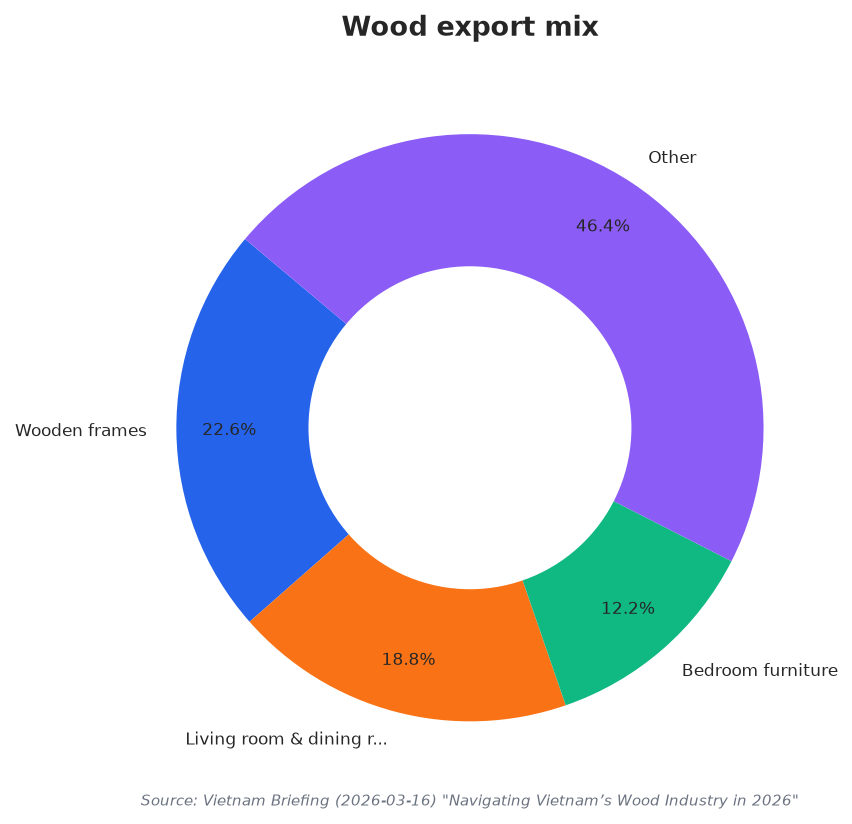
The dependence on overseas buyers amplifies the impact of any policy shock. Furnilytics estimates about 82% of Vietnam’s furniture production is sold abroad, with the United States absorbing roughly 76% of total furniture exports. PRIMO puts export intensity even higher, stating roughly 93% of Vietnamese furniture output is exported. In value terms, PRIMO reports Vietnam’s wood and wood-product exports hit a record US$17.2 billion in 2025, up nearly 6% on 2024, with the US absorbing about 55% worth US$9.46 billion. Vietnam Briefing adds that wooden furniture represents about 61% of the sector’s total exports, and notes wooden-frame seating generated more than US$3.5 billion in export revenue.
Exporters are responding with a mix of price strategy, diversification, and compliance upgrades. CorporateCounsels.vn says manufacturers are re-evaluating pricing, contracts, and supply chains, including delaying or staggering US-focused launches, pivoting to non-US buyers such as Japan, the EU, or Australia, and reviewing input sourcing for origin rules, raw material traceability, and third-party certifications. Mordor Intelligence similarly notes that Section 232 tariffs and ongoing US anti-dumping cases elevate compliance costs and volatility in negotiated order terms, pushing exporters to reinforce traceability and certifications. At the same time, the EU offers a contrasting channel: Mordor Intelligence states the EU-Vietnam Free Trade Agreement removed tariffs on 83% of wood product tariff lines immediately and completed the phase-out of the final 17% by 2025, enabling 0% tariffs in 2026 for Vietnamese furniture shipped to the EU. Together, these shifts define today’s Vietnam furniture exports tariff reality: staying competitive now means managing duty risk while building options beyond a single destination.
What US tariff level is being applied to wooden furniture from Vietnam?
What does recent data show about applied US duties on Vietnam-made furniture?
How concentrated is Vietnam’s furniture export dependence on the US market?
How are exporters adapting to the Vietnam furniture exports tariff environment?
Is there a lower-tariff alternative market for Vietnamese furniture exporters?