Vietnam construction steel demand is regaining momentum as big-ticket infrastructure and industrial builds move from planning into procurement cycles. In 2023, domestic steel demand in Vietnam grew 12% to 27 million tons, with the construction sector accounting for 65% of national steel consumption. The rebound was visible late in the year, too: Q4 2023 steel demand surged 20% due to public investments, and construction steel demand peaked at 1.1 million tons per month in October 2023. Infrastructure projects boosted steel demand by 15% in 2023, linking the demand story tightly to transport, public works, and project execution capacity.
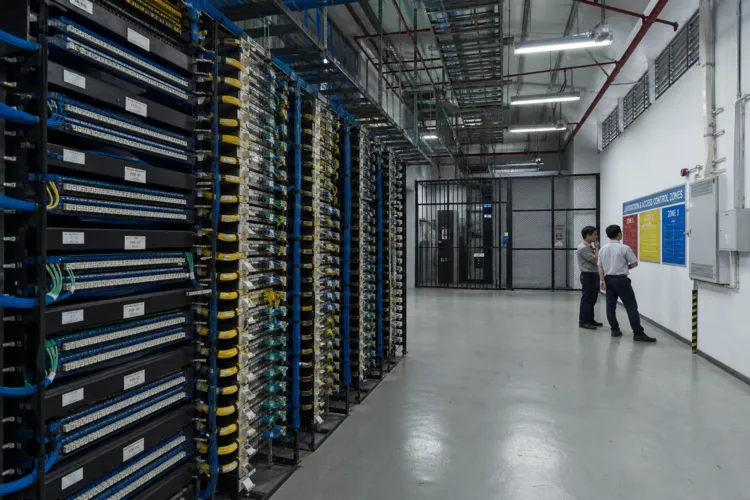
One reason the cycle looks different is the shift toward more engineered, specification-driven work. Vietnam’s structural steel fabrication market was sized at USD 2.26 billion in 2026 and is projected to reach USD 3.13 billion by 2031, implying a 6.73% CAGR over that period. The same source ties demand to higher-spec frames, including data-center frames, offshore wind towers, and composite cores that require narrower tolerances and certified quality management. In 2025, heavy section beams and columns held 40.51% of the structural steel fabrication market share, while construction captured 46.73% of revenue, reinforcing that building activity remains the primary downstream driver.
What’s Powering the Next Wave of Orders
FDI-led industrial expansion is one of the clearest demand channels for fabricated and structural steel. Multinationals committed USD 36.6 billion in 2024, with 60% of it going into manufacturing, supporting ongoing buildout of industrial parks and clear-span warehouses that favor steel structures. Industrial land rents in Binh Duong and Dong Nai increased 15–20% in 2024, a signal that site development and facility construction remained active. At the same time, hot-rolled coil (HRC) sourcing still matters for cost and lead times: Vietnam’s import dependency for HRC was 45% of total consumption in 2023, underscoring how supply chains and import exposure can shape project economics.
Government-led infrastructure adds another layer of pull-through. A USD 120 billion infrastructure plan is cited as deepening the project pipeline, and it includes expressways, airports, and metros that require large volumes of fabricated girders. Long Thanh International Airport alone is described as calling for 90,000 m² of steel framing designed to TCVN 9386:2012 seismic codes, which elevates the importance of certified execution. Inside fabrication, welding held a 34.07% share of 2025 value, while cutting is expected to grow fastest at an 8.23% CAGR, reflecting how productivity and precision become differentiators when megaproject schedules tighten.
Demand is also broadening across product categories commonly grouped as “articles of iron or steel.” One Vietnam-focused market report estimates construction alone accounts for 45–60% of consumption in that category, reflecting roads, bridges, ports, industrial parks, and residential development as recurring end uses. Regionally, Ho Chi Minh City accounted for 34.4% of 2025 structural steel fabrication spending, while the rest of Vietnam is expected to post the fastest growth at an 8.1% CAGR to 2031. The combined picture is a rebound that is not only about volume, but also about compliance, engineering complexity, and the ability to deliver certified work at speed.
What recent indicators show Vietnam’s construction-related steel demand rebounding?
How large is Vietnam’s structural steel fabrication market, and what is the outlook?
How much of Vietnam’s steel consumption is tied to construction?
What is shaping the next wave of demand beyond basic building volume?
Where is structural steel fabrication spending concentrated in Vietnam?