Vietnam’s cloud computing market was valued at USD 3,967.1 million in 2025, and IMARC Group estimates it could reach USD 9,662.3 million by 2034, with a 10.08% CAGR during 2026–2034. That momentum is tied to more infrastructure landing in-country, including what IMARC describes as global cloud giants setting up in Vietnam. As more workloads move off on-premise stacks, buyers are weighing two competing priorities: the hyperscaler value proposition of reliable, scalable platforms and the practical requirement to keep data and operational control aligned with local rules and expectations.
Signals of localization are no longer abstract. IMARC highlights an example from August 2024, when Singapore-based Cloud4C established a new data center in Hanoi to deliver fully managed, domestically compatible hyperscale cloud computing solutions for Vietnamese businesses. IMARC also links local presence to clear outcomes: reduced latency, better data sovereignty compliance, and improved service quality. At the same time, Ken Research frames Vietnam’s public cloud market value at USD 0.96 billion and notes the market is pushed by enterprise demand for scalable infrastructure and ongoing digital transformation, while also facing data sovereignty concerns, stringent regulatory compliance requirements, and high competition between global and local providers.
Sovereignty Pressure Meets Hyperscaler Scale
Globally, sovereign cloud is being defined around strict control over data, applications, and infrastructure inside specific geographic boundaries. Polaris Market Research values the global sovereign cloud market at USD 117.65 billion in 2025 and projects a 24.3% CAGR from 2026 to 2034, with “data sovereignty” holding a 42.8% share in 2025. Grand View Research similarly places the 2025 global sovereign cloud market at $117.53 billion, projecting $648.87 billion by 2033 at a 24.1% CAGR. Those global numbers do not describe Vietnam directly, but they help explain why Vietnamese buyers and regulators are pushing questions of residency, jurisdiction, and operational control into mainstream cloud procurement.
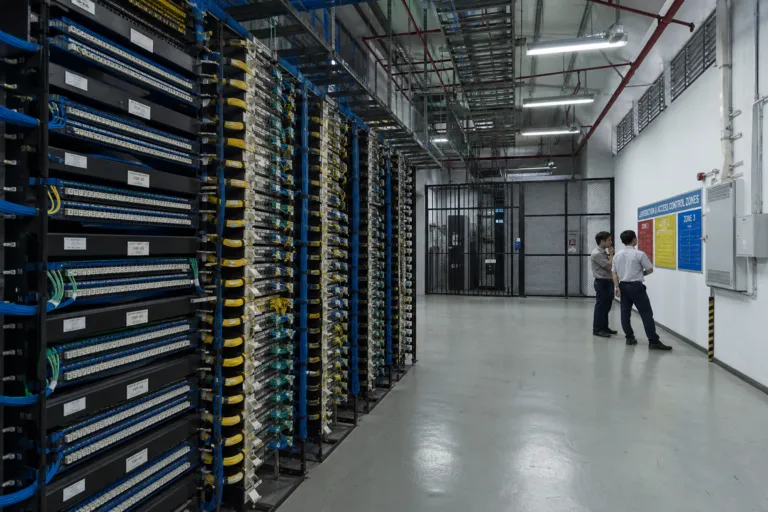
On the infrastructure side, Vietnam’s data center server indicators show how hyperscaler momentum can reshape local capacity planning. Mordor Intelligence reports that virtualization and private cloud held 38.74% share of Vietnam’s data center server market in 2025. It also reports colocation sites commanded 67.95% of the Vietnam data center server market size in 2025, while hyperscaler facilities are growing at a 14.76% CAGR through 2031. The same source points to policy liberalization removing equity caps on foreign investors in July 2024 (VietnamBriefing), and notes that edge and enterprise micro-centers persist where data sovereignty or process-control loops preclude public cloud.
In practice, the “battle” in the Vietnam cloud services market is less about a single winner and more about workload-by-workload choices. IMARC points to local telecom and state-owned companies being geared up to build local cloud ecosystems to reduce reliance on foreign infrastructure and to create safer sovereign data spaces. Ken Research adds a concrete policy anchor by citing Vietnam’s Cybersecurity Law (2018) and the requirement that data generated within the country be stored locally. For buyers in finance, manufacturing, telecom, and government-facing programs, the market is increasingly about mixing public cloud scale with in-country infrastructure, compliance-driven architectures, and partnerships that keep sensitive workloads under local control.
What is the 2025 size of Vietnam’s cloud computing market, and what is the 2034 outlook?
What concrete example shows cloud localization happening in Vietnam?
How fast are hyperscaler facilities growing in Vietnam’s data center server market?
What does “sovereign cloud” mean in this context?
What are the main forces reshaping Vietnam’s cloud services market right now?