Northern Vietnam’s industrial real estate market is forecast to enter a new growth phase from 2026, as strategic infrastructure projects near completion, supply expands, and green industrial parks become a decisive factor for foreign direct investment. Experts from Cushman & Wakefield Vietnam note that FDI firms are becoming more selective. Investors still consider rental costs, but they increasingly prioritize long-term expansion potential, synchronised infrastructure, and transparent legal frameworks. In this environment, ESG standards and carbon-reduction commitments are no longer a “nice to have.” They are increasingly a prerequisite for many multinational corporations, and they are changing what “investment-ready” means in the North.
This shift is visible in market preference. Statistics cited by VNA show that about 80% of FDI enterprises prioritise investing in industrial parks with green energy infrastructure, reflecting tightening global environmental standards. At the national level, data from the Foreign Investment Agency under the Ministry of Finance shows that by the end of 2025, Vietnam had more than 500 industrial parks with a total planned area of about 145,000 hectares, with an average occupancy rate exceeding 75%. These parks account for around 35–40% of newly registered FDI in Vietnam, and manufacturing and processing FDI is heavily concentrated there, representing 70–80% of total registered capital in that field.
What “Green” Now Means Inside New-Generation Industrial Parks
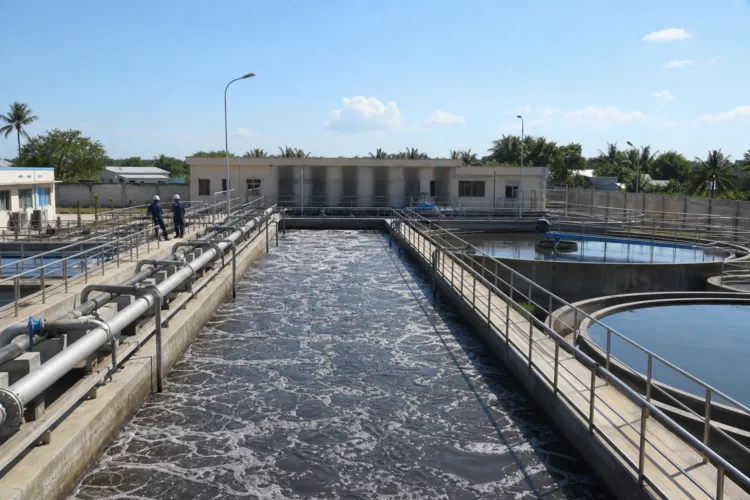
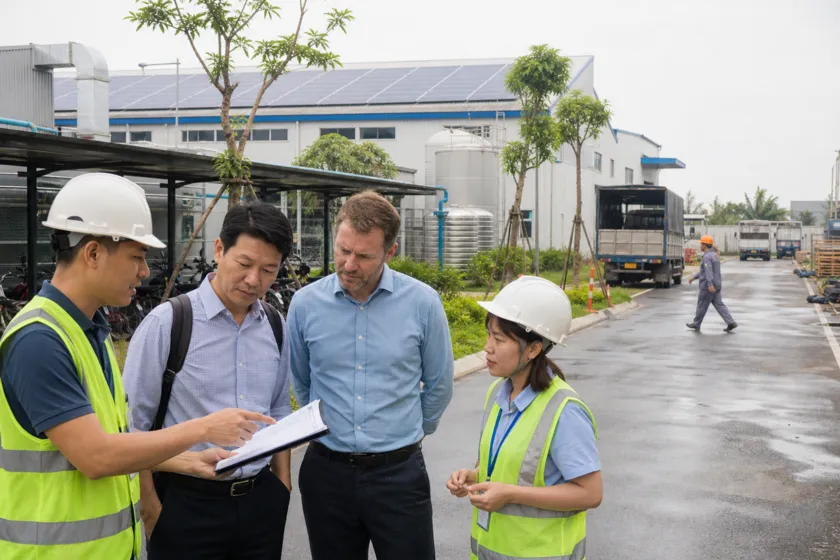
Developers are responding by building green planning into projects from the outset, especially across a new northern production belt described by Cushman & Wakefield Vietnam experts. New-generation industrial parks integrate rooftop solar systems, centralised wastewater treatment, eco-friendly materials, and smart energy management. Developers are also adopting renewable energy, water recycling, and smart management systems to align with corporate ESG requirements. Enhanced technical standards for factories and warehouses can support automation and digitalised production, which is critical for semiconductor and electronics supply chains that demand stable infrastructure and dependable operational controls.
Outside the North, the same ESG-first approach is also being framed as a competitive edge. A Prodezi Long An JSC executive said industrial parks that prioritize ESG standards, renewable energy adoption, and circular economy practices are gaining an advantage in attracting FDI, particularly from markets committed to net zero targets, while also linking their model to Decree 35/2022/ND-CP and international ESG standards. In a Cushman & Wakefield survey cited by VnExpress, “sustainability” is now among the three most important criteria for investors, with over 70% willing to pay 7–10% higher rents for green infrastructure to reduce emissions and comply with ESG standards.
The direction is clear: ESG is becoming the baseline for the next wave of capital, and the northern market is positioning itself to benefit. Experts believe the green production belt can strengthen the North’s long-term competitiveness as global supply chains restructure and ESG requirements tighten. Yet challenges remain in making eco-industrial zones practical at scale. Vietnamnet reports that while the concept is codified in law, there are no binding requirements, creating uncertainty about standards and enforcement, and there is no true green credit mechanism tailored for industrial park businesses. Against that backdrop, the vietnam green industrial park fdi story is increasingly about execution: proven infrastructure, transparent rules, and measurable sustainability built into daily operations.
Why are green industrial parks becoming decisive for FDI in northern Vietnam?
What share of FDI enterprises prioritize parks with green energy infrastructure?
How big is Vietnam’s industrial park base by the end of 2025?
How much higher rent are investors willing to pay for green infrastructure?
What are the key obstacles to scaling eco-industrial parks in Vietnam?