Vietnam’s cashew industry is rewriting its playbook. Instead of competing only on volume, exporters are pursuing higher-value positioning built on quality, compliance, and differentiated formats. Market estimates put the Vietnam cashew market at USD 9.19 billion in 2025 and USD 9.54 billion in 2026, with a forecast to reach USD 11.88 billion by 2031 at a 4.50% CAGR over 2026–2031. At the same time, one industry white paper notes that Vietnam has exceeded USD 5 billion in export revenue, but profitability is under pressure due to rising raw material costs and stagnant kernel prices. That combination is pushing exporters toward margin expansion strategies that go beyond commodity trading.
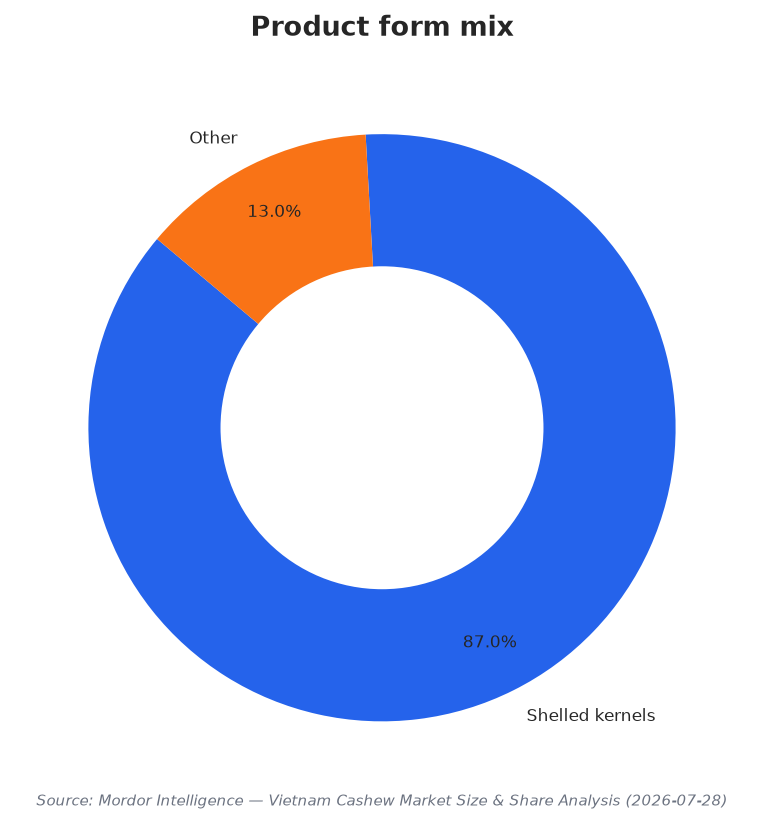
The shift starts with processing strength and product mix. In the Vietnam cashew market, shelled kernels held 87.0% share in 2025, reinforcing how central kernels are to value creation. On the supply side, a global market report describes Vietnam’s 347,634 metric tons processing base, placing it alongside India’s 782,000 metric tons harvest within an Asia-Pacific region that supplied 62.5% of 2024 output. Vietnamese firms also benefit from scale in trade: one analysis says Vietnamese companies maintain control over more than 80% of global kernel exports. But holding share is no longer enough. Exporters are looking for premium lanes, including specialty-grade W180 kernels for European confectionery buyers and growing interest in cashew butter among North American snack manufacturers seeking plant-based spreads.
What “Moving Up the Value Chain” Looks Like in Practice
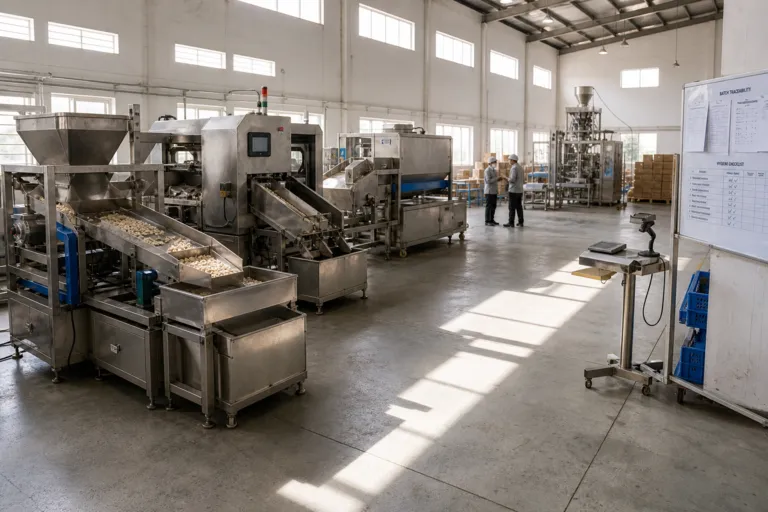
Value-chain progress is increasingly tied to technology and measurable quality outcomes. Processors are investing in upgraded optical grading lines to reduce kernel breakage, and automated optical sorters using deep-learning algorithms have reduced breakage rates by over 4% points compared with manual grading. These upgrades support more consistent grades for demanding buyers. Public financing is also part of the story. In March 2025, Vietnam’s Ministry of Agriculture launched a VND 100 trillion (USD 4.2 billion) credit program to reduce capital costs for equipment upgrades, cold storage, and traceability solutions. Commercial banks, including Vietcombank, allocated VND 15 trillion (USD 644 million) to support cashew processors. The same framework is positioned to help smaller factories meet European Union sustainability standards and earn a USD 150 premium per metric ton, while bonded warehouse pilots in Binh Phuoc aim to streamline customs clearance and lower inventory costs.
Compliance and traceability have become export tools, not just obligations. Vietnam’s Ministry of Agriculture and Rural Development coordinates with the national food safety regulator to enforce maximum residue limits for aflatoxin and pesticide contaminants, which pushes processors toward HACCP and ISO 22000 certification for European Union and United States market access. The EU Deforestation Regulation adds new traceability demands that favor operators with documented supply chain mapping. Exporters that can prove traceable supply chains can capture premiums in the EU, and one global report also notes that certified organic kernels can earn 15–20% premiums. Meanwhile, Alibaba.com highlights that supply chain transparency laws in the EU and US require verifiable, deforestation-free origins, turning ESG compliance into both a cost and a premium opportunity for Southeast Asian exporters.
Higher value is also emerging through channel strategy and new end uses. E-commerce expansion is cited as a driver that can enable retail margins exceeding 30%, and technology-driven productivity improvements and direct-to-consumer models are opening margin opportunities for small and medium-sized enterprises. Demand is evolving too. The plant-based dairy boom is creating new demand for “scorched pieces” and “splits” used in vegan cheeses and cashew milks, described as a 5.0% CAGR opportunity. Exporters are making these shifts while managing risks, including raw nut import dependency: one market outlook says Vietnam processors source over half of raw cashew nuts from African origins, exposing margins to currency volatility and West African supply disruptions. In that environment, the direction is clear: build resilient sourcing, raise processing performance, and sell a story that premium buyers will pay for.
What is driving Vietnam’s cashew exporters to move up the value chain?
How important are kernels in Vietnam’s cashew market mix?
What role does automation play in premium positioning?
What financing supports processing and traceability upgrades?
How concentrated is Vietnam’s role in global kernel trade?