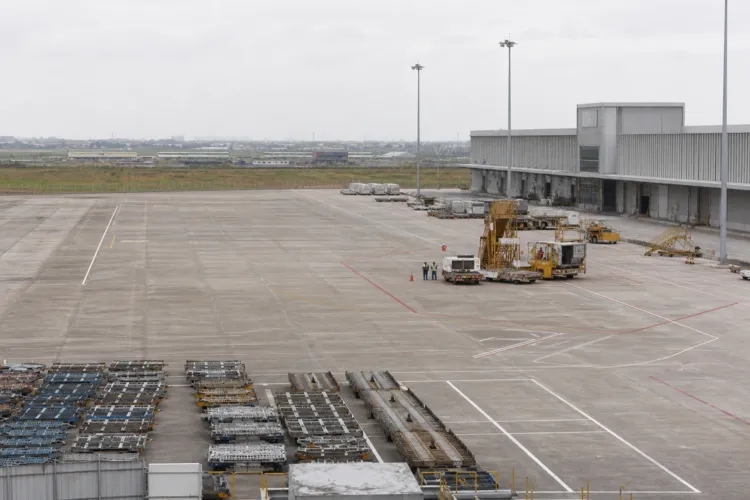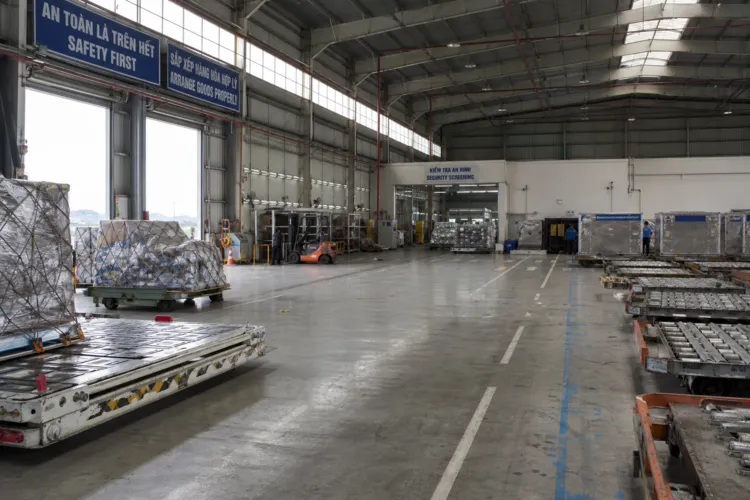
Vietnam’s port agenda is shifting from simple expansion to bigger, more connected hubs that can compete for transshipment cargo. In Ho Chi Minh City, authorities approved a consortium to develop the Can Gio International Transshipment Port project after it awaited city approval for nearly four years. The consortium is led by Terminal Investment Limited (49%), alongside Vietnam Maritime Corporation (36%) and Saigon Port (15%), a subsidiary of VIMC. Sources describe the project value around nearly US$5 billion, including figures of $4.9 billion and $4.98 billion. Planned on an offshore islet at the mouth of the Cai Mep River, the port is designed to become Vietnam’s largest transshipment port, with an initial capacity target of 4.8 million TEU by 2030 and a long-term goal of 16.9 million TEU by 2047.
Scale and phasing are central to the Can Gio plan. The first phase includes up to four berths designed to accommodate vessels weighing up to 250,000 tons. The ultimate plan envisions 13 berths with a total quay length of 7.5 kilometers. Another source frames the development footprint at approximately 571 hectares in Ho Chi Minh City, while the approved site is also described as about 570 hectares. Authorities set conditions on implementation, including restrictions on ownership transfers for a decade, a mandated investment minimum within the first ten years, and strict disbursement and completion timelines. Officials also require investors to balance transshipment cargo with import-export flows to avoid disrupting nearby ports, while ensuring protection of Can Gio’s unique ecosystem.
Can Gio’s Connectivity, Competition, and the Cai Mep Link
Can Gio is not planned as a standalone terminal. Ho Chi Minh City has oriented Can Gio to coordinate closely with Cai Mep - Thi Vai to form a large-scale gateway port cluster, with one estimate suggesting international transshipment containers could account for about 75% to 80% of Can Gio’s total throughput. The approval for Can Gio also comes as the city advances other capacity moves. Earlier, Ho Chi Minh City approved an expansion of the Cai Mep cluster involving a new $1.95 billion port project called Cai Mep Ha, expected to increase the city’s total port system capacity by 10.8 million TEU per year. For MSC, Can Gio expands a footprint where it already operates in the Cai Mep port cluster and handles over one million TEU of Vietnamese cargo annually.
Connectivity projects are also being tied directly to port viability. VietnamNet reports Ho Chi Minh City plans to build the Can Gio bridge before 2029 to link the area with Nha Be district. Rung Sac road is planned to be expanded to 10 lanes and connected to the Ben Luc - Long Thanh expressway. These links are framed as part of making Can Gio function as both a national gateway and an international transshipment hub. Another source argues Vietnam currently depends heavily on foreign ports, mainly in Singapore and Malaysia, for transshipment, and positions Can Gio as an effort to change that dependence by capturing more sorting-and-redistribution activity inside Vietnam.
Beyond Can Gio, national policy signals a broader modernization push that shapes Vietnam deep water port development priorities. B-Company notes Vietnam’s seaport network spans over 3,260 kilometers of coastline and, under Decision No. 804/QĐ-TTg (2022), includes 34 seaports across six regional clusters. By scale, the network includes 2 special-class ports (Hai Phong and Ba Ria–Vung Tau), plus 11 first-class, 7 second-class, and 14 third-class ports. Cargo throughput growth adds urgency: between 2020 and 2024, total volume of goods passing through Vietnam’s seaports rose from 692.3 million tons to 864.4 million tons, an overall increase of about 25%. Policy direction also emphasizes smart and sustainable development, including automation, green energy, and 5G-enabled logistics systems.
Who is developing the Can Gio International Transshipment Port, and how is ownership split?
What capacity is Can Gio targeting, and by when?
How big is the Can Gio port site and what is the long-term berth plan?
How does the Can Gio project fit into Vietnam’s deep-water port development push?
What do the sources say about Vietnam’s overall seaport throughput trend?