Vietnam’s infrastructure and construction pipeline is expanding fast, which raises the stakes when basic inputs tighten. Mordor Intelligence values the Vietnam infrastructure market at USD 19.61 billion in 2025 and estimates it will grow from USD 20.91 billion in 2026 to USD 28.81 billion by 2031, alongside explicit warnings about execution risks such as sand shortages and delayed public disbursements. Transportation alone held 47.86% of infrastructure market share in 2025, keeping expressways, bridges, and related works at the center of spending. Mordor also projects the broader Vietnam construction market at USD 80.61 billion in 2026, reaching USD 115.78 billion by 2031. With such momentum, a sand crunch does not stay localized; it can ripple into budgets, procurement, and timelines.
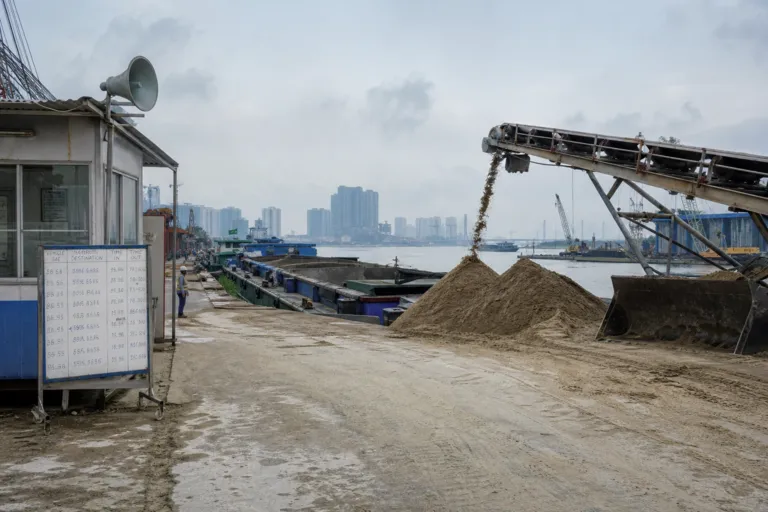
In Ho Chi Minh City, the pressure is already visible in contractor pricing and site logistics. SGGP quoted a construction materials engineer at Bac Trung Nam Infrastructure Construction JSC saying sand prices rose from about VND385,000 per cubic meter in late 2025 to nearly VND500,000 per cubic meter at the time of reporting. The same report ties tightening supplies of sand, stone, and steel to delays and rising costs across major works, from bridges to ring roads. It also notes the city expects material demand to rise sharply from 2026 to 2030 because many key infrastructure, traffic, and public investment projects are rolling out at once. That combination turns sand procurement into a critical path activity rather than a routine purchase order.
Why a Sand Crunch Becomes a Timeline Problem
Multiple sources describe a widening mismatch between demand and supply, which is exactly what disrupts construction sequencing. Vietnam.vn reported that the supply of sand, stone, and fill soil is significantly lower than demand as infrastructure and transportation projects in Ho Chi Minh City enter accelerated construction and disbursement phases. By the end of the second quarter of 2026, the Ho Chi Minh City Department of Construction reported new price milestones, with construction sand up 73% and stone up 63% compared to the same period the prior year. Contractors cited in the same coverage said sand is scarce and “extremely high” versus state-announced prices, and that they must place orders very early. Early ordering can protect continuity, but it also changes cash flow needs and raises the risk that shortages still appear when delivery windows slip.
Those schedule risks land inside an industry that is trying to move faster, not slower. MarkWide Research describes Vietnam’s construction sector as compressing delivery timelines through design-build integration, which eliminates traditional handoffs and concentrates accountability with contractors. Meanwhile, Mordor Intelligence reports that new builds accounted for 67.76% of Vietnam construction market activity in 2025, and that conventional on-site techniques still held 94.55% of revenue share in 2025, even as modern methods are projected to grow. High shares of new builds and conventional execution mean sites still depend heavily on steady flows of basic materials. When sand is constrained, the result is not only price escalation but also rescheduling of concrete works, reallocation of crews, and greater exposure to contract disputes during volatile market periods.
To reduce disruption, local authorities and investors are focusing on monitoring and sourcing flexibility, but the challenge remains structural. SGGP reported that Ho Chi Minh City tasked its Department of Construction with tracking material prices monthly to curb market anomalies, while urging investors and contractors to secure additional legal or imported sand sources to safeguard timelines. Mordor Intelligence also highlights policy reforms that aim to keep large projects moving through the approval pipeline, yet it still flags sand shortages as an execution risk that can inflate budgets and elongate timelines. That is the core of the Vietnam construction sand shortage story: a fast-growing project pipeline colliding with constrained inputs, turning sand availability into a decisive factor for whether megaproject milestones hold or slide.
How is the sand shortage affecting construction timelines in Vietnam?
What sand price signals are contractors seeing in Ho Chi Minh City?
Which materials besides sand are also seeing sharp increases?
Why does the issue matter more as Vietnam’s project pipeline grows?
What actions are being suggested to reduce disruption from the Vietnam construction sand shortage?