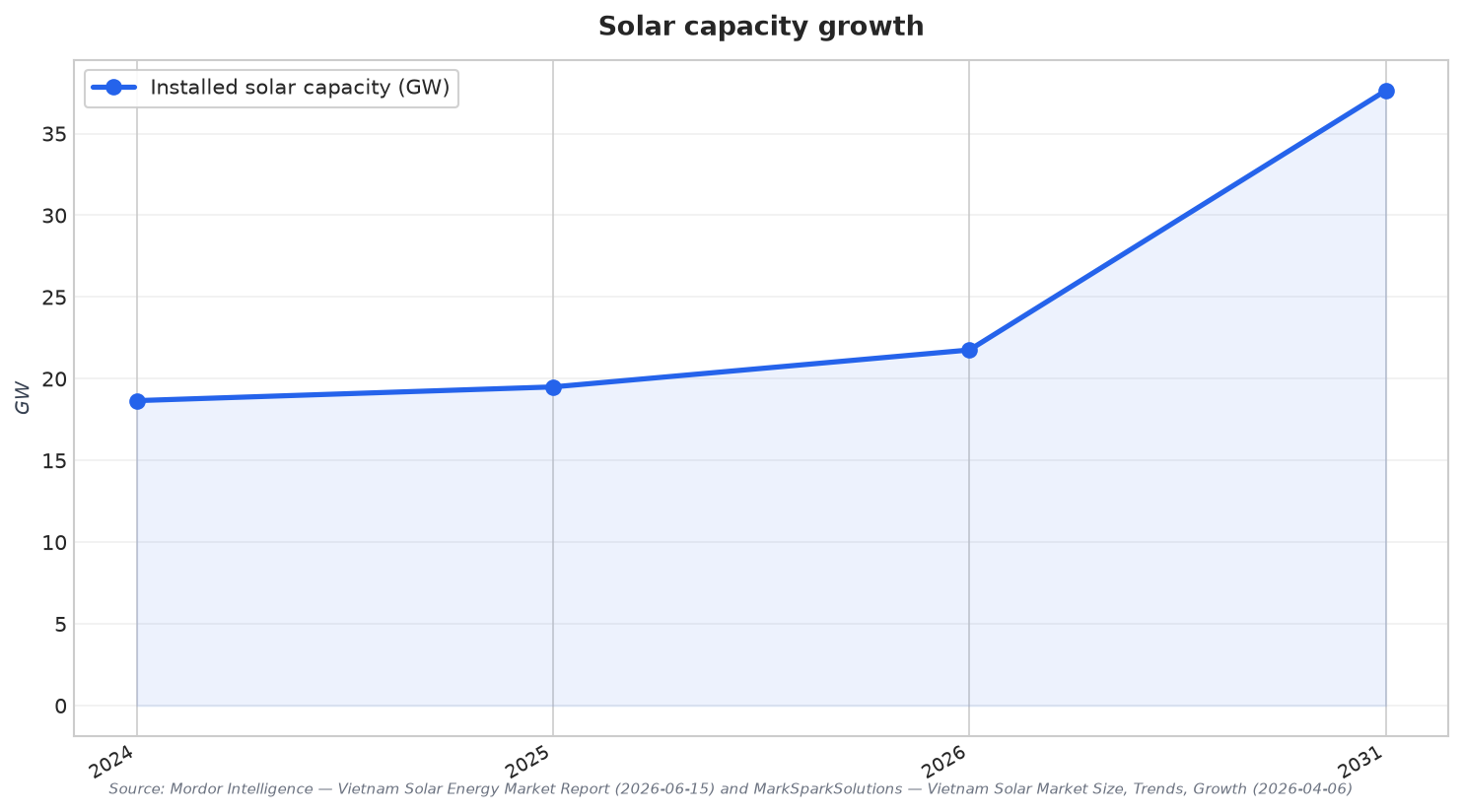
Vietnam’s solar build-out is moving fast, and that speed makes grid flexibility a core challenge. Mordor Intelligence values Vietnam’s solar energy market at 19.5 GW in 2025, with an estimate of 21.76 GW in 2026 and a forecast of 37.63 GW by 2031 at an 11.58% CAGR. Another market view from MarkSparkSolutions reports 18,660 MW installed in 2024 and estimates 45,977 by 2033 at an 11.8% CAGR. These trajectories do not just add clean generation. They also raise dispatch, curtailment, and ramping pressure that storage must absorb.
Policy signals underline why storage is being pulled into project design. Mordor Intelligence notes Decision 768 (April 2025) reset PDP8 and raised the 2030 solar ceiling to 46.5–73.4 GW, while also mandating battery energy storage equal to at least 10% of nameplate capacity with a 2-hour duration. The same source cites lithium-ion arrays costing USD 200–250 per kWh and adds that this can mean USD 40–50 million added to a 100 MW plant. MarkWide Research also points to storage co-location changing procurement specs, with lithium iron phosphate systems bundled to meet EVN ramp-rate requirements for grid stability.
Why Pumped Storage Is Back in the Conversation
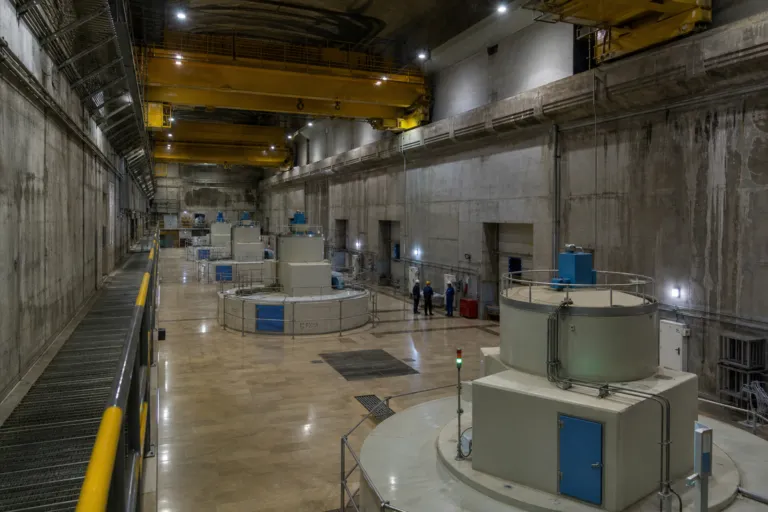
Pumped storage hydropower is framed as a long-term storage tool because it can shift energy from off-peak periods to peak demand windows. Conventus Law describes the cycle clearly: surplus electricity pumps water to an upper reservoir, and generation occurs when water is released to a lower reservoir to drive turbines, with the closed-loop repeated as needed. In the context of Vietnam pumped storage hydropower, this “water battery” concept speaks directly to the flexibility gap created when midday solar output does not match evening demand and when grids face short-term balancing needs.
Project momentum is also visible in regional storage tracking. Mordor Intelligence’s ASEAN energy storage report states that Vietnam’s Bac Ai Pumped Storage project is 1,200 MW and entered its main construction phase in January 2026, after exceeding early construction targets in 2025 for tunnelling, earthworks, and access infrastructure. The same item cites USD 780 million in World Bank and AIIB financing. That report also links Vietnam’s broader storage push to curtailment and dispatch challenges, noting that pumped hydro and battery systems are appearing in parallel pipelines rather than as either-or options.
These storage discussions sit inside a wider hydropower market picture. WiseGuyReports describes a “Global Hydropower in Vietnam Market” valued at USD 6.88 billion in 2025, projected to reach USD 10 billion by 2035 at a 3.8% CAGR, with pumped storage listed among the technologies covered. Meanwhile, the ASEAN energy storage report says on-grid storage held 79.1% of the ASEAN energy storage market size in 2025, reflecting regulated procurement and utility planning. For Vietnam, this suggests that grid flexibility solutions—pumped storage and mandated batteries—will be shaped heavily by on-grid implementation and financing capability.
Why does Vietnam need more grid flexibility as solar grows?
What does PDP8 require for battery energy storage on new solar projects?
How does pumped storage hydropower work in practice?
What is known about the Bac Ai pumped storage project in Vietnam?
How is Vietnam pumped storage hydropower being positioned alongside batteries?