
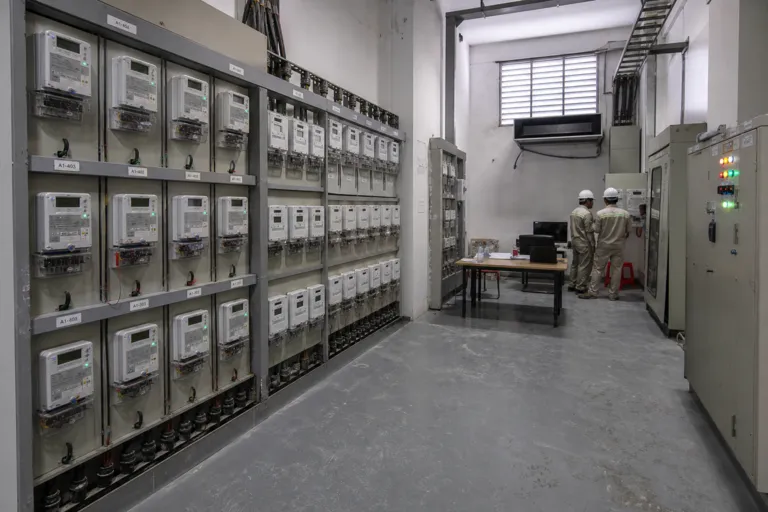
Vietnam’s smart metering market is being shaped by a mix of energy-efficiency priorities, smart grid adoption, and renewable energy integration. Ken Research values the Vietnam smart meters market at USD 1.1 billion based on a five-year historical analysis, and describes a shift toward advanced metering infrastructure (AMI) that improves operational efficiency and customer engagement. The same report highlights real-time monitoring and predictive maintenance as recent trends, with utilities and consumers benefiting from improved billing accuracy and reduced energy wastage. In parallel, Ken Research values the Vietnam electric sub-meters market at USD 900 million, also based on a five-year historical analysis, and links growth to modernization initiatives and IoT-enabled energy management.
Policy is a major accelerator for the Vietnam smart meter rollout, especially in new construction where compliance can be standardized. Ken Research states that Circular No. 31/2019/TT-BCT from the Ministry of Industry and Trade mandates smart meter installation in new residential and commercial buildings, including technical standards and operational requirements intended to enhance energy management, ensure billing accuracy, and support sustainable development and energy efficiency. A second mandate also appears in the sub-meter segment: Circular No. 23/2017/TT-BKHCN from the Ministry of Science and Technology establishes mandatory requirements for installation and verification of electricity meters, including smart meters, in new residential and commercial buildings, aiming to facilitate real-time monitoring of electricity consumption.
Where Demand Response Starts: Two-Way Data and AMI
Demand response depends on visibility and control, and multiple sources connect smart meters directly to those capabilities. Precedence Research describes smart meters as enabling targeted demand-response that shifts load away from peak, while also reducing the need for manual meter readings and supporting renewables and storage through granular telemetry. It also notes that smart meters enable accurate monitoring of two-way electricity flows, supporting distributed energy resources such as rooftop solar systems. Market Data Forecast defines smart electric meters as digital systems capable of two-way communication, real-time monitoring, remote disconnection, outage detection, and integration with grid management platforms. For Vietnam, the opportunity is to pair mandated deployments with AMI software and meter data management to enable time-based programs and automated responses.
Geography also matters because the rollout is not uniform. Ken Research identifies Ho Chi Minh City, Hanoi, and Da Nang as dominant markets, citing rapid urbanization, industrial activity, and government investment in smart city initiatives. It also notes that the southern region, particularly Ho Chi Minh City, leads in electricity consumption and economic activity, which can pull metering deployments forward. These hubs can become proving grounds for demand-response operations because they concentrate residential, commercial, and industrial loads, and they are likely to be early adopters of software, services, and integration work that connects meter data to distribution management and network management.
Vietnam’s trajectory sits inside a larger regional and global growth story, but the figures should be read as context rather than local outcomes. Market Data Forecast values the Asia Pacific smart electric meter market at USD 3.10 billion in 2025, estimates USD 3.40 billion in 2026, and forecasts USD 7.11 billion by 2034, with a 9.67% CAGR from 2026 to 2034. At the global level, Precedence Research values the smart meters market at USD 38.98 billion in 2026 and expects USD 86.44 billion by 2035, with a 9.27% CAGR, while Global Market Insights estimates USD 22.34 billion in 2025 and projects a 6.7% CAGR between 2026 and 2035. For Vietnam, the near-term question is how quickly mandated installation, AMI deployment, and data integrity requirements translate into scalable demand-response programs.
What is driving Vietnam’s smart meter rollout in new buildings?
How large is the Vietnam smart meters market according to the sources?
How do smart meters enable demand response?
Which Vietnamese cities are highlighted as key hubs for smart meter adoption?