Vietnam’s seafood export story is now a mix of strong topline growth and sharper trade friction. VASEP cited seafood exports of about USD 11.3 billion in 2025, up around 13% year on year, while the Department of Customs reported USD 8.4 billion in the first nine months of 2025, up 16% versus the same period. Production also expanded, with total fisheries output estimated at 9,947.5 thousand tons, up 3.0% compared to 2024. Shrimp production rose 5.5% to 1,522.2 thousand tons. Yet export momentum is colliding with a tariff squeeze, especially in the US market, shaping the conversation around Vietnam shrimp and pangasius export tariffs in 2026.
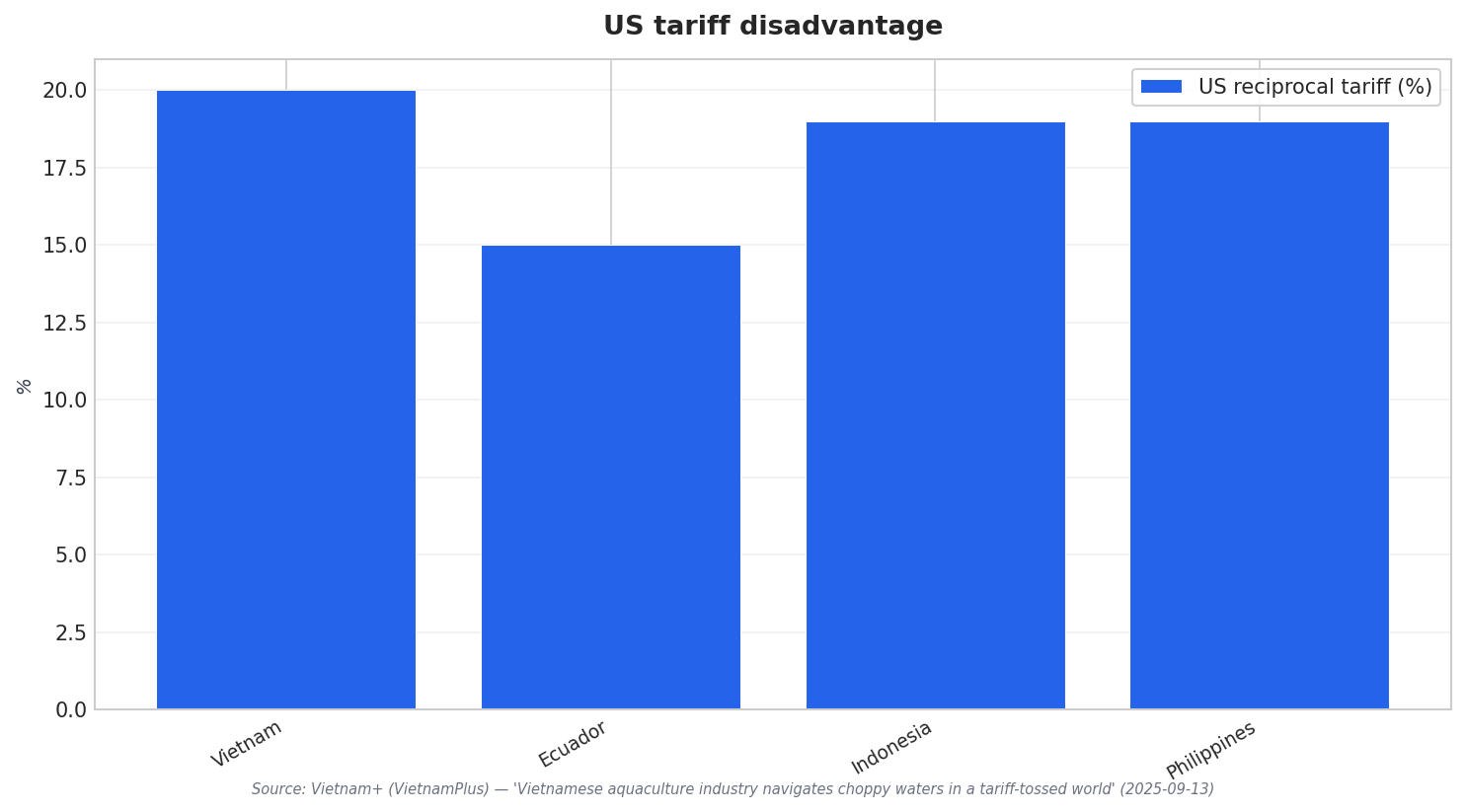
The tariff shock was most visible in the rush to ship before new US measures took effect. VietnamPlus reported July exports at USD 971 million, up 6.1% year on year, and total shipments of USD 6.22 billion for the first seven months, up 17.2%. VASEP linked this to exporters pushing goods to the US before August 1, ahead of reciprocal tariffs. Effective August 7, Vietnam’s three major aquatic exports, including shrimp and tra fish (pangasius), faced a 20% US reciprocal tariff, compared with Ecuador’s 15% and Indonesia and the Philippines’ 19%. That pricing disadvantage matters even when volumes are holding up.
US Duties Hit Shrimp and Pangasius Profitability
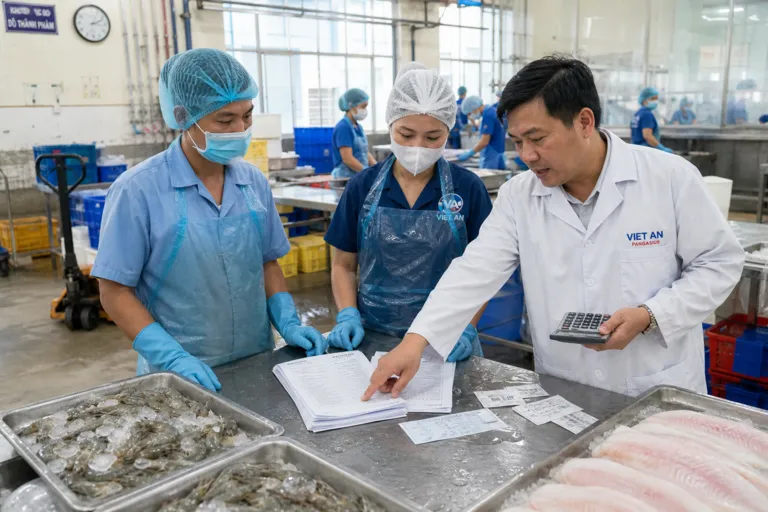
Shrimp is still the biggest pillar. InCorp Vietnam put 2025 shrimp exports at USD 4.6 billion, about 40% of total seafood export value, while another 2025 recap reported shrimp at USD 4.65 billion, up 20% from 2024. But the US market is turning into a margin battlefield. VietnamPlus noted preliminary anti-dumping duties as high as 33.29% for some large Vietnamese shrimp players under the US Department of Commerce’s POR19 review. Company disclosures show the cost impact: Sao Ta’s selling expenses doubled to VND 511 billion, with anti-dumping tax liabilities of nearly VND 98 billion and countervailing tax liabilities of VND 60 billion, up 98% and 158%. Even with Q3 revenue near VND 3 trillion and gross profit up 36% to VND 418 billion, its gross margin was only 14%.
Pangasius is also feeling the squeeze. A 2025 recap put pangasius export value at USD 2.19 billion, up 8%, ranking second after shrimp. VietnamPlus reported tra fish exports rising 11% to USD 1.22 billion in the first seven months, but warned that sales to China were stalling due to overflowing inventories, while US tariffs inflate costs further. Company-level results underline the volatility: Vinh Hoan’s August total revenue fell 8% year on year to nearly VND 1.1 trillion, while US-market revenue shrank 36% to VND 271 billion. In contrast, Navico reported profit after tax of more than VND 283 billion in Q3, ten times the prior year’s period, and a 36% revenue increase in the first nine months to over VND 4.8 trillion, showing that outcomes can diverge sharply across exporters.
For 2026, the industry’s playbook is widening beyond price. InCorp Vietnam argues the next growth stage depends on traceability, compliance with global standards, value-added processing, and diversified export markets. Vietnam.vn also reported that seafood export turnover in Q1 2026 reached USD 2.62 billion, up 13.3% year on year, but stressed that trade barriers and logistics costs can raise prices and weaken competitiveness. The same source noted that in the US market, shrimp and pangasius continue to face anti-dumping lawsuits, and tariffs applied to some businesses remain high despite more positive signs in reviews. With exports concentrated in the US, the EU, China, Japan, and South Korea, 2026 looks like a test of how quickly firms can rebalance exposure while meeting tighter import requirements.
How did Vietnam’s seafood exports perform in 2025?
What US tariff level was reported for Vietnam’s key seafood exports in 2025?
What is driving the Vietnam shrimp and pangasius export tariff 2026 discussion?
How large are shrimp and pangasius in Vietnam’s export mix?
Which strategies are highlighted for reducing tariff and market risk in 2026?