
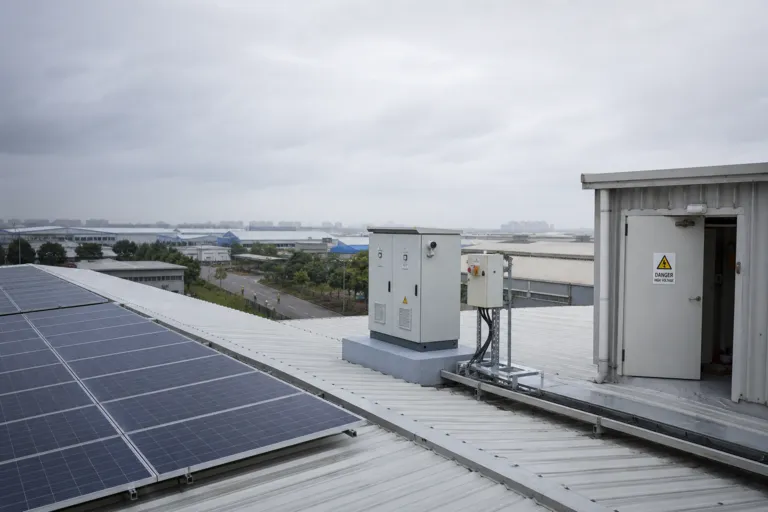
Vietnam’s industrial rooftop solar story has been shaped by a policy reset. TransitionZero notes that the absence of a clear rooftop solar framework from 2021 to 2024 delayed deployment, especially for corporates needing clarity on system size limits and whether third-party developers could sell electricity to host factories. That uncertainty contributed to a market slowdown, with reportedly no new plants entering operation between 2021 and 2023. Yet rooftop systems still spread across factories, warehouses, shopping malls, and more, and TransitionZero’s Q3 2025 release estimates 96% of total detected solar capacity to date was built before the end of 2020, with the remaining 4% constructed from 2021 onwards and mainly rooftop installations.
For factories, today’s investment logic is increasingly about using solar on-site. Electricbird says Vietnam’s fixed feed-in tariff era has closed and the regulatory environment now incentivizes a higher self-consumption ratio rather than maximizing grid export. It also frames rooftop solar as a long-lived asset, stating rooftop systems carry a 20 to 25-year operational lifespan, and that owning the system can hedge exposure to grid tariff changes by locking in part of consumption through self-generated power. This shift aligns with the 2025 focus described by Lawzana: self-consumption rooftop solar, decarbonisation, and grid stability, rather than uncontrolled export driven by incentive schemes.
Decree 58/2025: Two Compliance Pathways for Factory Rooftops
Reslink Energy describes Decree 58/2025/ND-CP (replacing Decree 135/2024/ND-CP on March 3, 2025) as separating rooftop systems into two categories. Category 1 is self-consumption with no grid connection: no surplus sale, no bidirectional meter, and no interaction with EVN’s grid. Reslink says this route is subject to minimal regulation and does not require EVN approval before installation. Category 2 is grid-connected and can export surplus power to EVN, with more steps, including prior registration with the local electricity authority and installation of a bidirectional meter by EVN. For factories weighing options, the rules effectively define whether the project is a behind-the-meter energy measure or a system that also participates in controlled surplus sales.
Where factories do want the option to export excess, the surplus limit is central to project design. Reslink reports that grid-connected systems can export surplus generation up to 50% of total generation, and that this was raised from a previous 20% cap by Decree 243/2026/ND-CP, effective June 26, 2026. Asia News Network also describes the same change as a doubling from 20% to as much as 50%, and notes industry participants expect improved economics as a result. On pricing, Reslink cites a specific purchase price EVN pays for surplus at VND 1,050 per kWh under MOIT Circular 12/2026/TT-BCT (April 2026), and explains why many projects still prioritize self-use when export prices sit below the retail electricity rate a factory would otherwise pay.
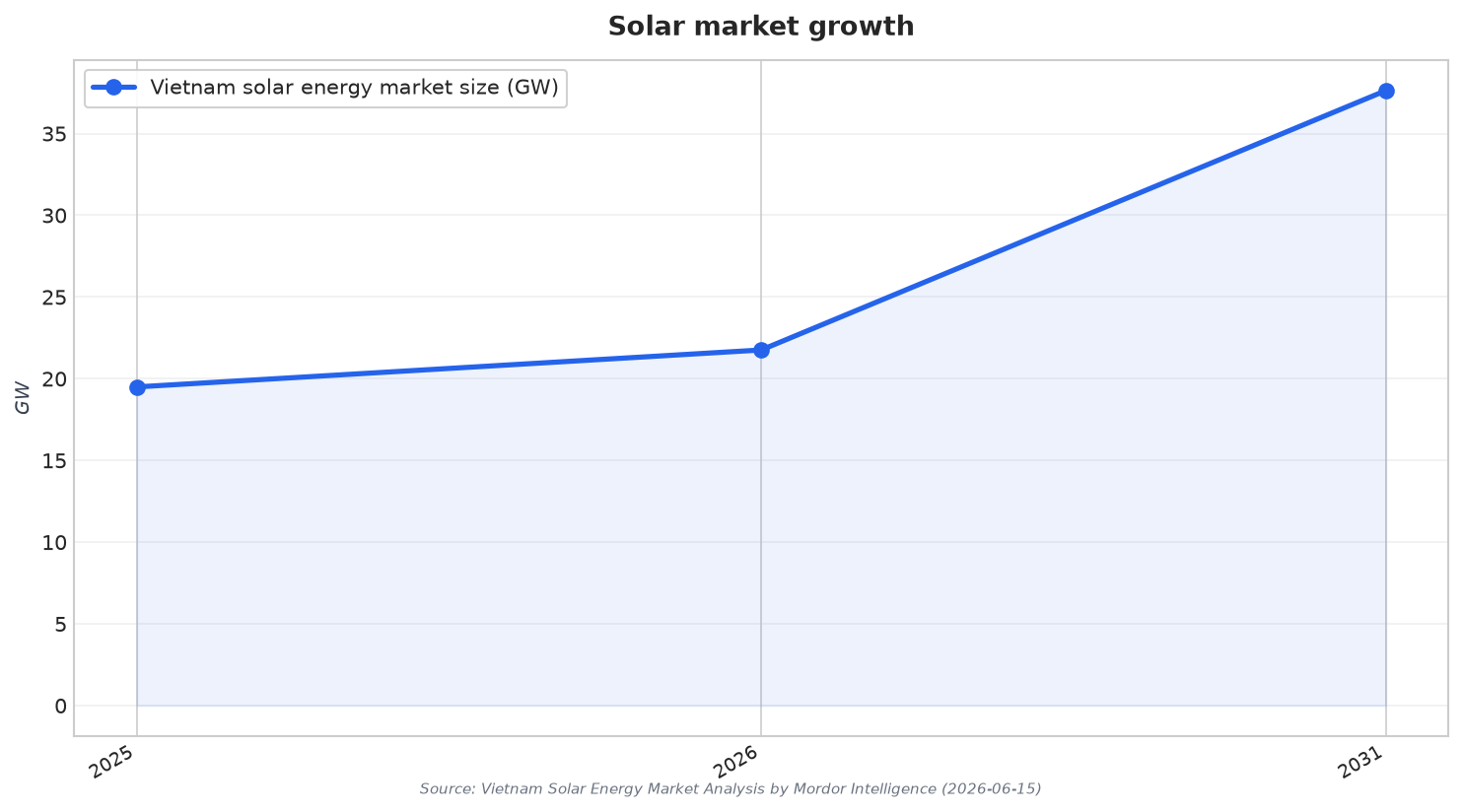
Factories also need to plan beyond the energy model and into approvals and obligations. Lawzana highlights that key authorities include MOIT, ERAV, provincial Departments of Industry and Trade, and the relevant EVN subsidiary or local power company, and advises combining legal, technical, and financial due diligence because tariffs and implementation details can change. It adds practical compliance points: factories typically must obtain approval from the Fire Prevention and Fighting Police for rooftop modifications and DC cabling layouts, and significant roof-structure changes may trigger building permit adjustments. End-of-life panels and inverters qualify as industrial waste, with hazardous elements handled by licensed waste contractors. In parallel, the wider market backdrop remains supportive: Mordor Intelligence values Vietnam’s solar energy market at 19.5 GW in 2025, with an estimate of 21.76 GW in 2026 and a forecast of 37.63 GW by 2031, while commercial and industrial installations are expected to advance at a 14.26% CAGR over 2026–2031 under the DPPA framework.
What are Vietnam’s two main rooftop solar categories for factories under Decree 58/2025?
How much surplus rooftop solar can a factory sell to EVN under the updated cap?
What surplus purchase price is cited for rooftop solar sold to EVN?
What approvals should factories expect beyond power-sector paperwork?
How do Vietnam rooftop solar self-consumption rules affect factory project choices?