
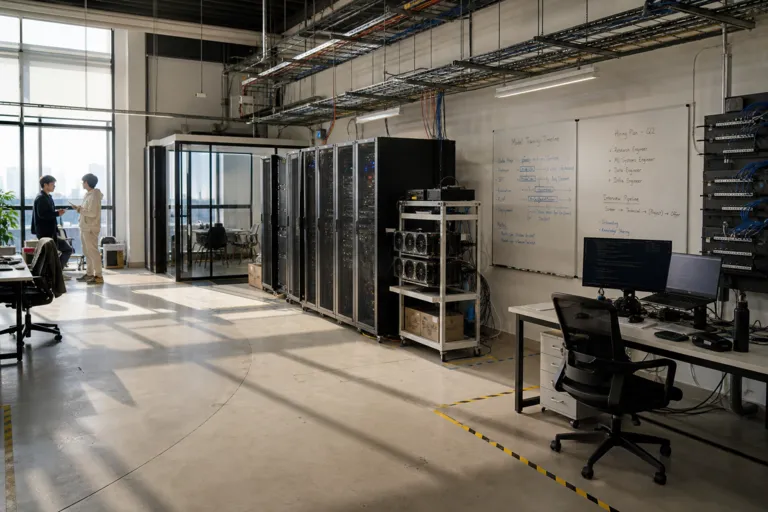
Nvidia’s Vietnam push is no longer just about selling chips into the region. During a December 2024 visit to Hanoi, CEO Jensen Huang signed an agreement with the Vietnamese government to establish an AI research and development center and an AI data center in Vietnam, and he described Vietnam as Nvidia’s “second home.” The company has said it wants to help build a broader AI ecosystem that includes advanced AI infrastructure, university-level AI training, and startup development. That framing matters for the talent race because it links research capacity, training pathways, and commercial deployment into one strategy rather than treating them as separate projects.
Vietnam is already positioning itself as a deepening engineering pipeline. One snapshot cited by VTI is that Vietnam’s technology workforce exceeds 530,000 professionals, with roughly 50,000 new graduates entering the field each year. In the same view of readiness, the WIN World AI Index Survey 2025 ranked Vietnam sixth overall across 40 countries for AI perception, trust, and preparedness, including third globally in AI trust and fifth in AI acceptance. Those indicators do not prove capability on their own, but they show why multinationals are placing talent-building bets in Vietnam, especially when combined with structured training initiatives.
From R&D Ambition to Factory-Floor Demand for AI Hardware Skills
Nvidia’s hiring signals that Vietnam’s role may extend beyond software. The company has been recruiting in Vietnam for manufacturing and operations roles tied to high-end GPUs, including a posting for an “SXM Manufacturing Test Engineer” that points to Foxconn as a potential manufacturing partner for Nvidia’s premium data-center GPU systems in Vietnam. The job description says the candidate would spend most working time at Foxconn factories and help “build next-generation GPU boards and products,” including developing diagnostics, validating testing stations, and improving manufacturing yield rates. The reference to SXM is notable because SXM modules are Nvidia’s most advanced data-center GPU platform, used in HGX and DGX AI supercomputing systems.
On the investment side, Nvidia has pledged to shift parts of its supply chain to Vietnam, with committed investment of $4-4.5 billion over the next four years, according to The Investor. That move is expected to generate about 4,000 direct jobs and as many as 40,000-50,000 indirect jobs. Separately, officials in late 2024 described commitments worth several billion dollars for relocating portions of manufacturing supply chains to Vietnam, with similar job estimates. Even without a full project timeline in public sources, the combination of advanced hardware-related hiring and job expectations reinforces why the Vietnam AI research development center narrative is inseparable from industrial workforce development.
Training and standardization are the other half of the talent race. VietnamNews reports on a programme that brings Nvidia’s Deep Learning Institute courses to Vietnamese learners and aims to equip students and working professionals with practical AI skills, while also aiming for a transparent, standardised system for assessing AI competencies. VTI also notes that in August 2025, the “Vietnam AI Academy,” developed in partnership with Nvidia, was formally launched to bring internationally standardized AI training to Vietnamese engineers. With demand for AI-specific roles described by VTI as doubling in 2025 compared to the previous year and reaching 2.5 times the level in 2023, the strategic message is clear: Vietnam is building both the R&D ambition and the skills pipeline needed to compete for high-value AI work.
What did Nvidia agree to build in Vietnam during Jensen Huang’s 2024 Hanoi visit?
How does the planned Vietnam AI research development center connect to the talent race?
What signals suggest Vietnam could move up the AI hardware value chain?
What job impact is expected from Nvidia’s supply-chain shift to Vietnam?
What does the WIN World AI Index Survey 2025 say about Vietnam’s AI readiness indicators?