
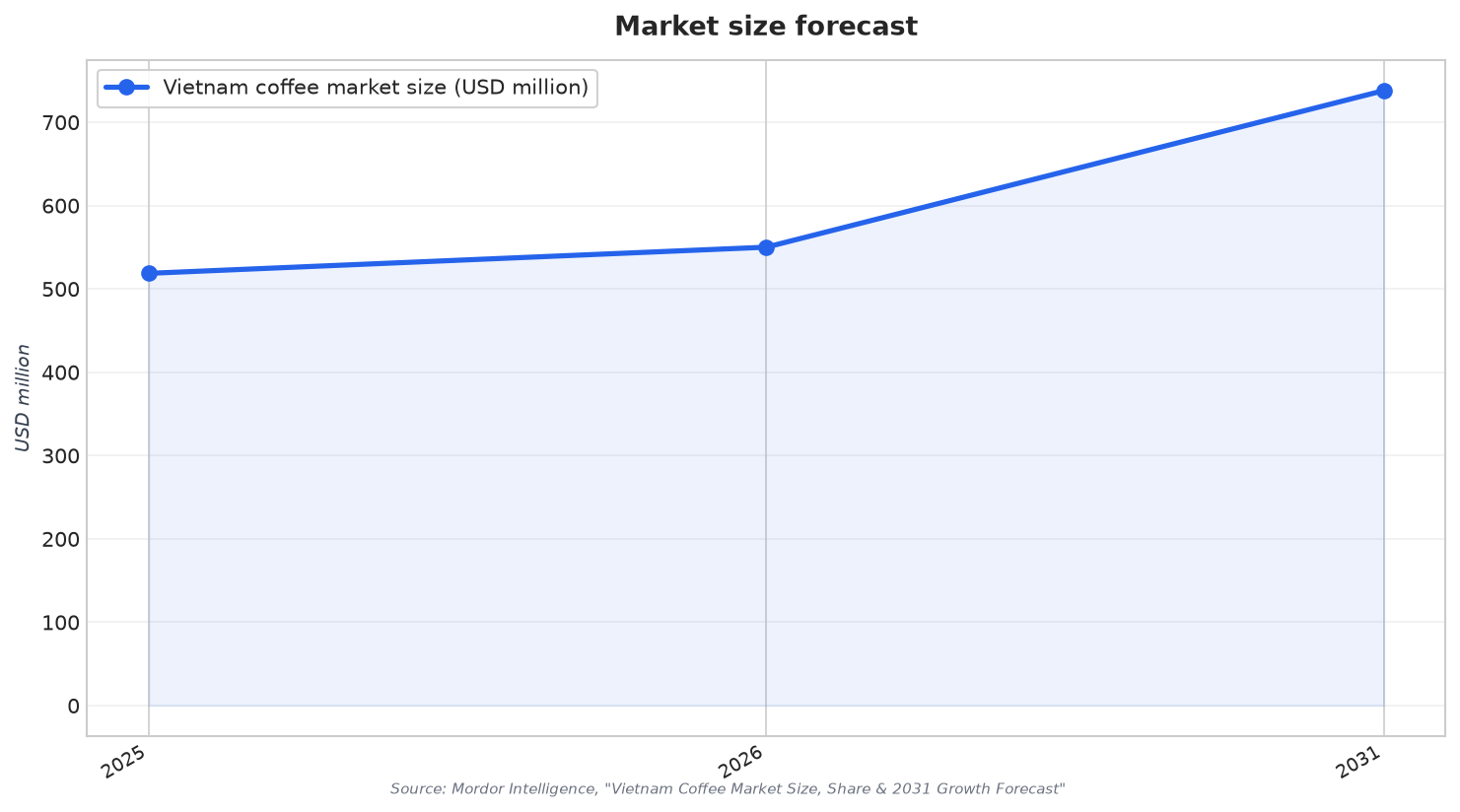
Vietnam’s coffee economy is being pulled by two forces at once: export momentum and an increasingly competitive domestic café landscape. Mordor Intelligence estimates the Vietnam coffee market at USD 550.11 million in 2026, up from USD 518.72 million in 2025, with projections reaching USD 737.99 million by 2031 at a 6.05% CAGR over 2026–2031. On the export side, the Ministry of Agriculture and Rural Development (Vietnam) highlighted coffee export revenue of around USD 5.5 billion in 2024, up from USD 4.1 billion the prior year. These headline shifts are now feeding into brand building at home, where chains and independents compete for daily habits and discretionary spending.
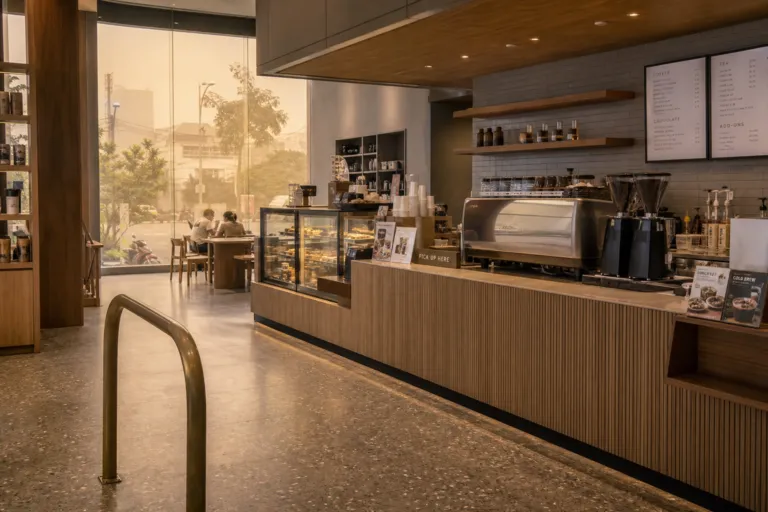
Competition in the café arena is intense because there is already huge supply and variety. Vietnam Briefing cites a Mibrand report that there were approximately 500,000 cafés by 2023, ranging from large to small. In this crowded setting, scale matters. Mordor Intelligence notes Highlands Coffee had 855 stores and posted 13% revenue growth in 2024. Phúc Long added 79 new locations, bringing its total to 237 in 2024. Chains are not only selling coffee. Mordor Intelligence describes a shift toward “immersive retail experiences,” which helps explain why store growth and format innovation have become central weapons in the fight for share.
Premiumization Meets Price Sensitivity
Premium drinks are booming, but the top end is under pressure from consumer trade-down. Vietnam Briefing reports that the share of consumers paying more than VND 100,000 (US$3.91) per cup fell from 6% to 1.7%. The same source shows frequency is also constrained: in the first half of 2024, 41.7% went to a café only one or two times per month, while 32.3% visited once or twice every week. This tension shapes the battle lines in the Vietnam coffee chain market: brands chase higher margins with premium positioning while also needing approachable price points and convenient formats to protect traffic.
Product mix trends hint at where chains and packaged players can overlap. Mordor Intelligence says instant coffee led with a 37.10% revenue share in 2025, while ready-to-drink beverages are forecast to grow at a 7.55% CAGR through 2031. It also reports off-trade accounted for 66.60% share in 2025, yet on-trade venues are the fastest-growing channel, forecast at 6.75% CAGR through 2031. In other words, cafés and retail shelves are both important, and brands that build loyalty in-store can still win volume in supermarkets, convenience, and other off-trade routes.
The “premium café boom” is also being shaped by Vietnam’s bean identity and by investments that elevate quality. Mordor Intelligence reports Robusta held an 81.35% share of the market in 2025 and is projected to grow at a 6.55% CAGR to 2031, aligning with Vietnam Briefing’s note that Vietnamese consumers prefer strong, bitter Robusta. At the same time, Mordor Intelligence points to adjustments in planted area to 610,000–640,000 hectares to focus on higher-grade output, plus investment in roasting, soluble, and ready-to-drink capacity. It also notes Nestlé, Trung Nguyên, and Highlands Coffee together controlled more than 50% of branded processing capacity in 2024, underscoring how scale players can link processing power with storefront presence.
What is driving competition in Vietnam’s coffee chain market right now?
How price-sensitive are café customers in Vietnam?
Which product forms are gaining momentum alongside café growth?
How important is Robusta to the local market and café positioning?
Who holds processing power in Vietnam’s branded coffee landscape?