Fast grocery fulfillment is moving from “nice-to-have” to a mainstream expectation in Vietnam’s largest metros. In this context, the market for vietnam quick commerce grocery delivery is being shaped by broader retail fundamentals and the way city shoppers buy daily essentials. Mordor Intelligence projects Vietnam’s retail market to expand from USD 171.40 billion in 2026 to USD 217.44 billion by 2031, with a 4.87% CAGR (2026–2031). Food, Beverage & Tobacco represented 48.35% of retail share in 2025, highlighting why groceries sit at the center of competition. Yet traditional mom-and-pop stores still held 59.35% share in 2025, so fast delivery models are racing to win share from entrenched habits while proving unit economics in dense districts.
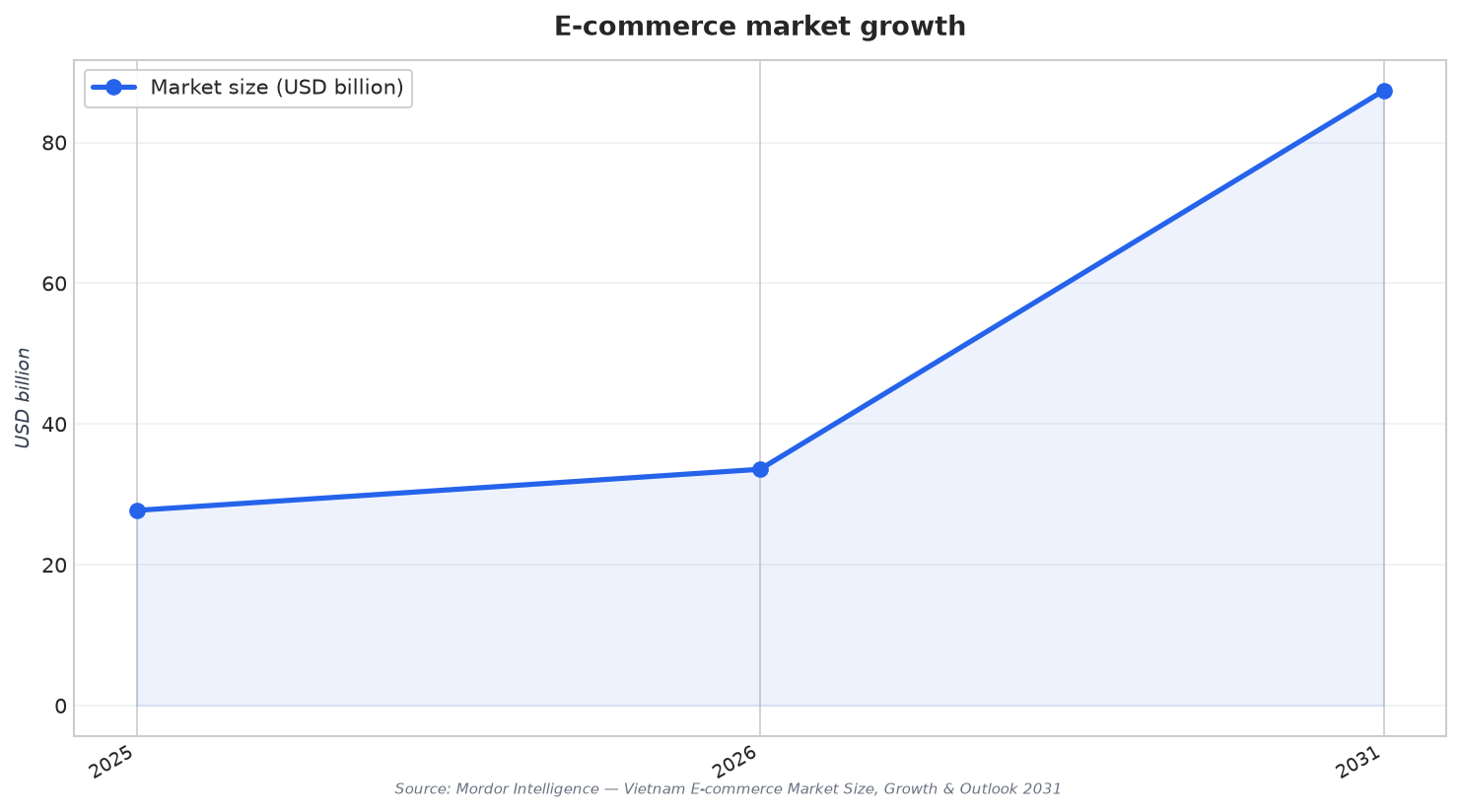
Digital demand is rising quickly, and it lowers the friction for grocery orders to shift from physical aisles to app checkouts. Mordor Intelligence expects Vietnam’s e-commerce market to grow from USD 33.57 billion in 2026 to USD 87.36 billion by 2031, at a 21.08% CAGR (2026–2031). Digital commerce is also described as about 9% of total retail sales, signaling that online is already material within retail. Product mix matters for quick commerce, because Mordor Intelligence forecasts Food & Beverages to expand at a 27.25% CAGR through 2031 within B2C e-commerce categories. With smartphones capturing 71.10% of e-commerce revenue share in 2025, the default grocery journey is increasingly mobile, which favors “minutes-not-days” delivery propositions.
Why Big Cities Win the First Wave
The race is most intense where density, spending, and digital maturity intersect. Ken Research values the Vietnam quick commerce market at USD 819 million and notes that Ho Chi Minh City and Hanoi dominate due to high population density, a growing middle class, and digital infrastructure. The concentration challenge is also visible in online grocery dynamics: Ken Research states Vietnam’s population reached 101.11 million in 2024, but only about 39.8% lived in urban centers at the start of 2024, limiting dense route economics outside major cities. VECOM also notes a large e-commerce development gap between Hanoi and Ho Chi Minh City and the other 61 localities. For operators, that gap becomes a playbook: lock in metro loyalty and delivery frequency first, then expand outward when logistics and demand clusters can support it.
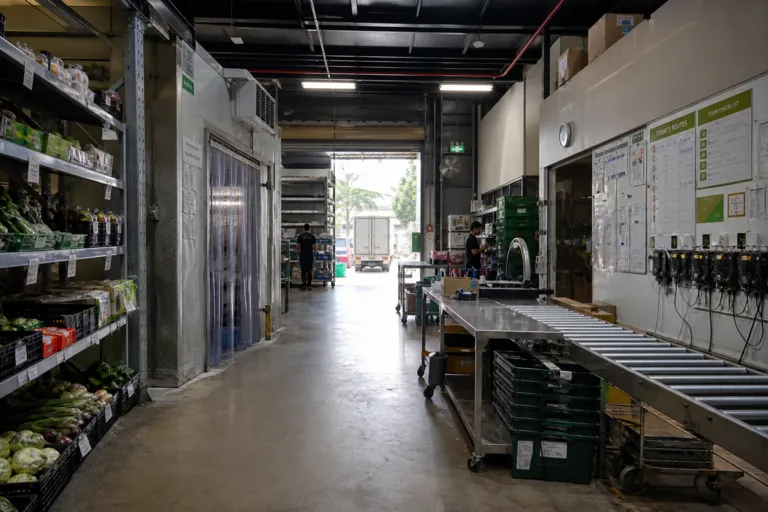
Payments and logistics are the enabling layer that turns “fast” into “repeatable.” Mordor Intelligence cites government reporting that card-less transactions soared 63.3% in volume and 41.45% in value in early 2024, while QR code usage leapt nearly ten-fold. Digital acceptance is also described as widespread, with 79% of food-service outlets and 74% of stores offering digital options. On the cold chain side, Ken Research reports Vietnam had over 100 commercial cold storage providers and 1.24 million pallet designed capacity in 2023. That capacity matters for quick grocery baskets that include chilled and frozen items, supporting wider assortment integrity when delivery windows shrink.
Retail formats in Vietnam are also aligning with quick-trip behavior that quick commerce tries to replicate digitally. Mordor Intelligence reports convenience stores held a 32.32% share in 2025 and are forecast to grow at a 6.35% CAGR through 2031, reinforcing proximity shopping missions in dense neighborhoods. Meanwhile, Ken Research values the Vietnam supermarket market at USD 5.85 billion in 2026 and projects it to reach USD 10.45 billion by 2031, at a 10.20% CAGR (2026–2031). As supermarkets and convenience-led networks invest in last-mile capabilities and as e-commerce maintains its share of retail, the competitive question in big cities becomes execution: who can keep baskets fresh, payments frictionless, and delivery promises consistent as demand scales.
What is driving the rush into quick grocery delivery in Vietnam’s big cities?
How large is Vietnam’s quick commerce market, according to Ken Research?
Why does quick commerce expand first in Hanoi and Ho Chi Minh City rather than other localities?
What infrastructure supports faster grocery delivery for chilled and frozen items?
What should shoppers expect from Vietnam quick commerce grocery delivery as payments go cashless?