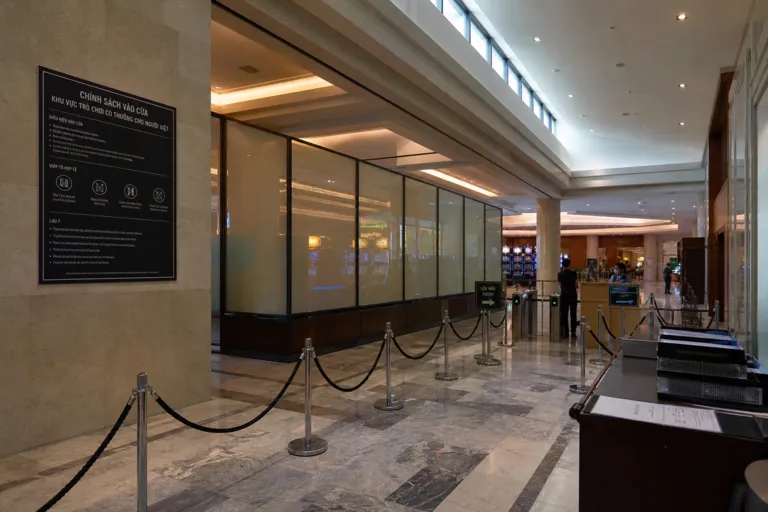
Vietnam’s casino debate is back on the table, and the pressure point is local access. Multiple reports describe a regulatory landscape where casinos and most forms of online and sports betting are still illegal for Vietnamese citizens, yet pilot programs have created exceptions under strict rules. Since 2019, Vietnamese citizens meeting specific criteria have been permitted to enter selected properties under a tightly controlled framework, with the Corona Resort & Casino in Phu Quoc cited as the most notable operational example. As policymakers reassess what worked and what did not, the direction of travel is clear: any expansion is likely to be framed as a regulated privilege, not an open market.
A fresh catalyst is the approval path for a major new resort complex in Quang Ninh. The People’s Committee of Quang Ninh Province gave a thumbs-up to a proposed US$2 billion (VND52.6 trillion) development in Van Don, described as a 244.45-hectare project. Reporting characterizes it as a “self-contained ecosystem,” combining a casino with hotels and other 24/7 entertainment and tourism components, and it is positioned for both domestic and international players. The project is linked to Sun Group via Van Don Sun Joint Stock Company, and the ambition is framed in comparative terms with destinations such as Macau and Las Vegas, even as Vietnam’s own rules remain cautious.
What the Phu Quoc Pilot Revealed—and Why It Matters Now
The earlier Phu Quoc locals-gaming pilot illustrates both the promise and the pitfalls of controlled access. One account says Vietnam launched a three-year locals trial in 2019 in Phu Quoc, later extended to 2024 due to the effects of Covid-19, and it ended in December 2024 after poor financial performance at Corona Resort & Casino. The property reported losses of VND300 billion in the first half of 2024, with reduced locals patronage cited as one factor. Another source describes eligibility rules in more detail, stating locals needed income verification of monthly earnings exceeding VND 10 million and paid entry fees, and that the program was suspended at midnight on December 31, 2024 pending evaluation.
That evaluation process is now a central part of the story. A guest analysis describes the Ministry of Finance as finalizing a comprehensive review of the pilot’s outcomes, expected to guide future policy, with preliminary data showing modest gains in tax revenue, tourism-related spending, and job creation. The same discussion flags concerns about social safeguards and regulatory enforcement and outlines possible recommendations such as expanding local access to more licensed casinos under strict requirements, creating a national gaming authority, and implementing electronic monitoring, third-party audits, and public impact reporting. This mirrors the broader argument that predictable enforcement will shape investor appetite as much as market access itself.
For a Vietnam integrated resort casino strategy, the opportunity is to build demand through tourism and domestic spending while keeping controls tight. Some reporting points to Phu Quoc’s tourism momentum: in 2024, Travel & Leisure named it the second most beautiful island in the world, after the Maldives, and for the first half of the year it posted a 92.6% year-on-year increase in tourism revenue. Regionally, a separate Asia-Pacific market forecast highlights how integrated resorts are being used across major hubs and says the Asia Pacific casino gambling market could rise from US$92.34 billion in 2024 to US$185.2 billion by 2033. For Vietnam, the question is how much of that integrated-resort momentum can be captured while keeping local participation within enforceable guardrails.
What changed in Vietnam’s approach to allowing locals into casinos?
What is the Van Don project in Quang Ninh, and how big is it?
How did the Corona Resort & Casino pilot perform financially?
What policy steps are being discussed after the pilot review?
What does a Vietnam integrated resort casino plan depend on next?