
Doi Moi 2.0 is being framed as Vietnam’s most ambitious structural reform push since the original Doi Moi reforms began in 1986. At the center is Resolution 68, described as upgrading the private sector to “the most important driving force” of the economy. Research and investor commentary point to a reform mix that is not presented as theory: it includes streamlining the state, decentralisation that empowers provinces, and targeted reductions in red tape. MUFG Research highlights a targeted 30% reduction in bureaucratic red tape, alongside public-sector downsizing and streamlined provinces. In a separate investor forum discussion, VinaCapital’s Eric Levinson positioned these shifts as a new phase of structural transformation aimed at elevating domestic private enterprise as the core engine for future growth.
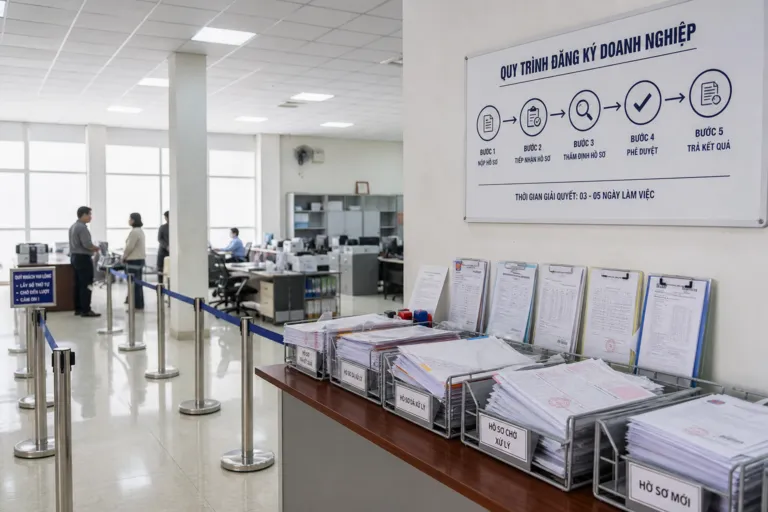
For investors, the practical question is whether governance reform is already changing execution and confidence. Early signals in 2025–2026 suggest momentum. One reported change is administrative streamlining from central to local levels, including the two-tier local administration model implemented from July 1, 2025. VietnamPlus also reports that tax reductions and exemptions helped strengthen market confidence after Resolution 68 was issued in May 2025, encouraging household businesses to convert into formal enterprises and boosting start-up activity. MUFG adds that savings from the streamlined state are expected to be reinvested into areas such as science, public education, and infrastructure. Taken together, these measures matter because they target common business constraints: processing time, compliance cost, and the predictability of approvals.
What “Private-Sector First” Looks Like in the Numbers
Reported business formation and market-entry data show why Vietnam’s private-sector push is being watched closely. A Vietnam.vn summary states that in 2025 the country saw nearly 297,500 newly established or resuming businesses, up 27.4% versus 2024. It also estimates nearly VND 6.4 million billion of total registered capital added to the economy by the private sector, up 77.8%. In the first four months of 2026, the number of businesses entering and re-entering the market reached nearly 123,000, up 36.7%, and as of May 18, 2026 Vietnam had over 1.062 million active businesses. The same source reports that total state budget revenue in the first four months of 2026 was estimated at VND 1,114 trillion, equal to 44% of the projected figure and up 15.2% year on year, linking improved private-sector activity to fiscal outcomes.
Resolution 68 is also being paired with a capital-markets narrative that investors can track. Vietnam.vn reports that by the end of April 2026, Vietnam’s stock market capitalisation reached approximately VND 10.5 million trillion, described as the highest ever and equivalent to about 82% of Vietnam’s 2025 GDP, which it lists as USD 524 billion. Investor participation is also cited: nearly 13 million accounts, up over 29% compared to end-2024. Separately, Levinson noted equity valuations around 14 times earnings, and closer to 10.5 times when excluding two large conglomerates, alongside expectations for broad-based earnings growth in the high teens for 2026 and 2027. He also referenced FTSE’s announcement that Vietnam would be upgraded to EM status subject to a March 2026 interim review, plus a longer-term ambition for MSCI inclusion by 2030—developments often associated with wider investor access and more diversified flows.
Beyond capital markets, private participation in “real economy” projects is being described as a visible proof point of the policy shift. VietnamPlus reports that domestic private firms are increasingly present in major infrastructure projects—airports, seaports, railways, and urban metro systems—areas previously dominated by State-owned or foreign firms. Another VietnamPlus report says that in 2025, 564 projects with combined investment of 5.2 quadrillion VND were launched or inaugurated, with private capital accounting for nearly 75% of the total. Looking forward, VietnamPlus also notes programmes for 2026–2030 to develop 1,000 pioneering enterprises and support firms expanding into international markets, aligning with a stated aim to plug more Vietnamese companies into global value chains. In this context, the investor takeaway from Vietnam private sector Resolution 68 is less about a single decree and more about an execution pattern that is starting to show up in company formation, project pipelines, and investable market depth.
What is Vietnam’s private-sector Resolution 68 trying to change for investors?
What early business-formation signals have been reported after Resolution 68?
How large is Vietnam’s stock market according to the cited 2026 update?
What does the reporting say about private capital in Vietnam’s project pipeline?