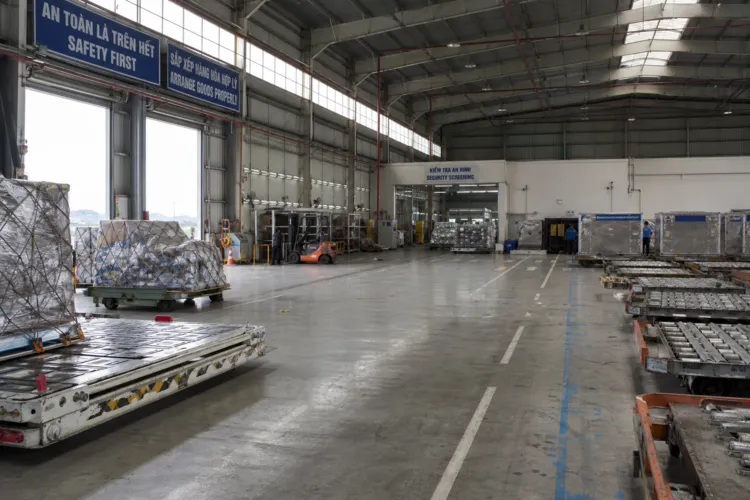

Working capital pressure often starts the moment a shipment lands. In a non-bonded warehouse model, importers pay taxes upon receipt and must handle immediate inspection requirements. Bonded warehousing changes that timeline. A customs bonded warehouse lets goods stay under customs control while duties and taxes are suspended until the goods leave the facility and enter the local market. For importers, that means duty payment can align with sales and real demand, not a port arrival date. This is the practical core of Vietnam bonded warehouse duty deferral: keeping capital available while inventory is still waiting to be sold or released domestically.
Vietnam is positioned as a rising trade hub in Asia, and the scale of its export economy helps explain why duty-suspended storage matters. One source notes Vietnam’s exports totalled $371 billion in 2022, ranking 9th globally for trade volume. In the same context, electronics are described as 40% of exports, and bonded warehousing is cited as a way companies use duty deferral to manage working capital for high-value or seasonal goods. Instead of paying duties and taxes upfront, an importer can store products closer to end users, plan releases in smaller waves, and keep cash available for operations while goods remain in a bonded zone.
How Duty Deferral Turns Inventory Into a Cash Flow Lever
Bonded status is described as a “critical financial enabler” because capital is not tied up in prepaid duties on inventory that has not yet sold. One Vietnam-focused example frames the impact clearly: for a brand importing $500,000 of goods per quarter, deferring 12–18% import duties would keep $60,000–$90,000 in working capital available in the operating account instead of sitting in a government tax account while inventory waits to sell. Another global benchmark cited in the sources says inventory-heavy businesses can free up 15–30% of tied-up capital through working capital optimization, and it argues that duty deferral is the highest-leverage lever for importers operating in Vietnam.
Bonded warehouses also support cross-border plays that reduce unnecessary duty exposure. Sources describe that goods stored for re-export can avoid duties, and that bonded facilities help suppliers store goods without paying duties until the moment of sale or re-export. Practical scenarios include using a bonded warehouse in Ho Chi Minh City as a centralized, duty-deferred inventory hub for Southeast Asia, and using a bonded warehouse in Bac Ninh to stage inventory near regional demand without immediate customs exposure. This flexibility helps companies consolidate goods from multiple suppliers in one bonded location and decide later whether to release into Vietnam’s domestic market or re-export onward.
Execution matters, and several sources tie results to process discipline and systems. One guide notes that WMS-to-bonded-warehouse integration connects a Warehouse Management System to a customs-licensed bonded storage facility so the WMS manages inventory and order execution while the bonded operator handles customs filings and duty events. The goal is simple: ensure duties are paid only when goods are released for domestic sale, not upfront on the full inbound shipment. Reported outcomes in that same source include 20–30% improvements in working capital availability versus traditional import models. Separately, an industry claim cited by FM Logistic attributes a 20–30% reduction in overall supply chain costs to bonded warehouses for businesses engaged in international trade, highlighting why importers often treat duty deferral as part of broader cost and agility planning.
What does duty deferral through a Vietnam bonded warehouse actually mean?
How can a bonded warehouse help protect working capital for Vietnam importers?
What role does re-export play in bonded warehousing strategy?
Can systems like a WMS support bonded warehouse compliance and duty timing?
What is the cash flow value of Vietnam bonded warehouse duty deferral for seasonal or high-value goods?