Vietnam issued Decree No. 342/2026/ND-CP on 3 September 2026, and it takes effect on 18 October 2026. The decree replaces the earlier framework used for licensing foreign-invested enterprises (FIEs) in goods trading, distribution, and related activities. Multiple guides note that the familiar two-licence architecture remains in place: a Business Licence for trading and distribution activities, and a Retail Outlet Establishment Licence for opening physical outlets beyond the first. What changes is the sharper definition of regulated activities, the practical steps to rely on treaty-based market access, and a stronger focus on planning for compliance, renewals, and filings so businesses avoid re-filing surprises.
One notable scope shift is how Decree 342 treats digital-platform activities. Lexology explains that the decree expressly identifies the management and operation of intermediary e-commerce platforms, social networks conducting e-commerce activities, and integrated e-commerce platforms as activities directly related to the purchase and sale of goods, and it brings them within the Business Licence regime. Vietnam Briefing also cautions that not every export, import, or wholesale activity necessarily requires a separate business licence under Decree 342. Activities outside the specified licensing list may be conducted once properly registered, but they still remain subject to market-access rules, product restrictions, and other applicable conditions, so companies should map their real operating model activity-by-activity rather than assume one licence covers everything.
What Decree 342 Changes for Licensing, ENT, and Reviews
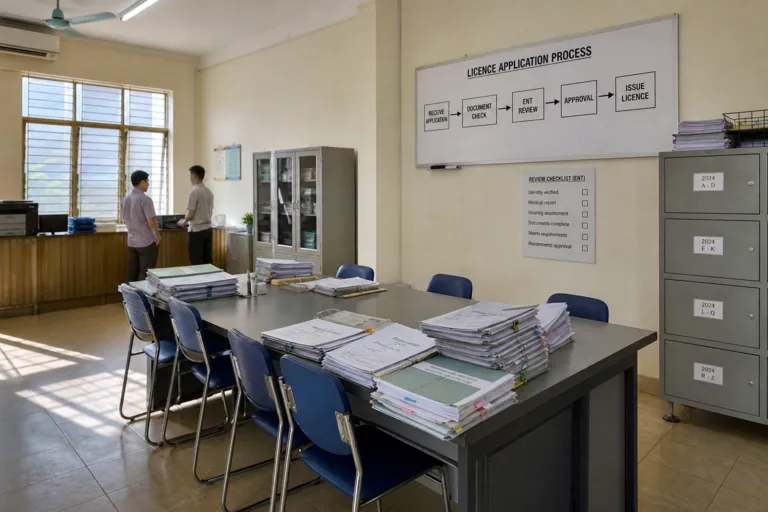
Decree 342 also reorganises who grants key approvals. Under Decree 09, the provincial Department of Industry and Trade handled granting, re-issuing, adjusting, and revoking Business Licences and Retail Outlet Licences. Under Decree 342, Lexology notes this authority moves to provincial People’s Committees (PPCs), based on where the FIE has its headquarters for Business Licences, and where the retail outlet is located for Retail Outlet Licences. The decree also updates how the Economic Needs Test (ENT) is framed for additional outlets. Vietnam Briefing states an ENT may apply when an investor establishes an outlet beyond its first, and it also notes Decree 342 excludes investors from countries or territories covered by a treaty under which Vietnam has committed to abolish the ENT, subject to the relevant treaty terms and implementation timetable.
Retail planning also faces a more explicit geographic lens. Lexology describes new geographic market thresholds for assessment: outlets below 5,000 m² are assessed at the commune or ward level, while larger outlets are assessed at the provincial level. The same Lexology update notes that previous criteria relating to job creation and State budget contributions are removed, while security, public order, and social safety considerations are expressly included. Decree 342 also introduces structured national-security consultation in certain cases. Lexology explains the licensing authority must consult the Ministry of Public Security and the Ministry of National Defense in cases involving non-treaty investors and certain uncommitted services or goods, and in cases where foreign investors control enterprises operating certain large digital platforms, generally those with at least 3 million annually active user accounts or average monthly users representing at least 3% of Vietnam’s population.
For transactions and ongoing compliance, Decree 342 adds clearer triggers and deadlines that can affect deal timing. Lexology highlights that a Vietnamese enterprise with existing retail outlets that later becomes an FIE—for example, after an M&A transaction where a foreign investor acquires and holds more than 50% of equity—must obtain the required Business Licence and Retail Outlet Licence. Vietnam Briefing also points to new periodic reporting: covered FIEs must submit an annual report before 15 January for the preceding calendar year and a first-half report before 15 July for 1 January to 30 June, and authorities may request documents or explanations. It adds that failure to submit periodic reports for 24 consecutive months, or to answer a specific reporting request within the prescribed period, can lead to licence revocation through the applicable procedure. In practice, this makes “decree 342 foreign invested trading” readiness as much about calendars and governance as it is about market access.
When does Decree No. 342/2026/ND-CP take effect in Vietnam?
What licences still matter most for foreign-invested enterprises under Decree 342?
How does Decree 342 change ENT assessments for new retail outlets?
When can national-security consultation be triggered under Decree 342?
What should companies focus on for decree 342 foreign-invested trading compliance?