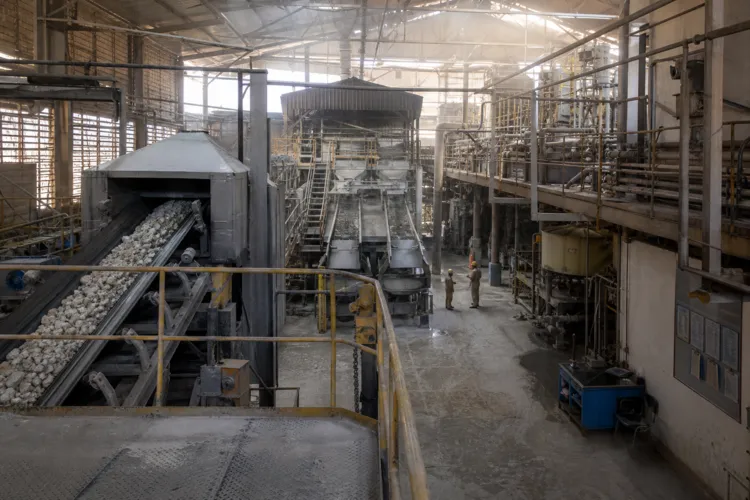
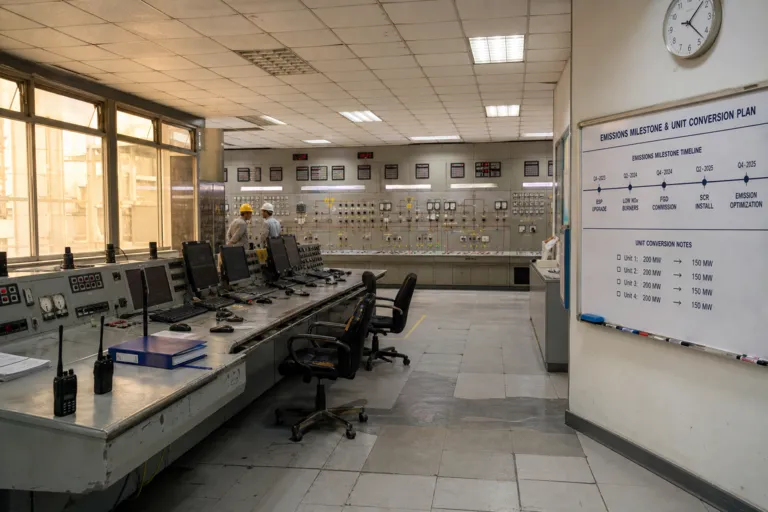
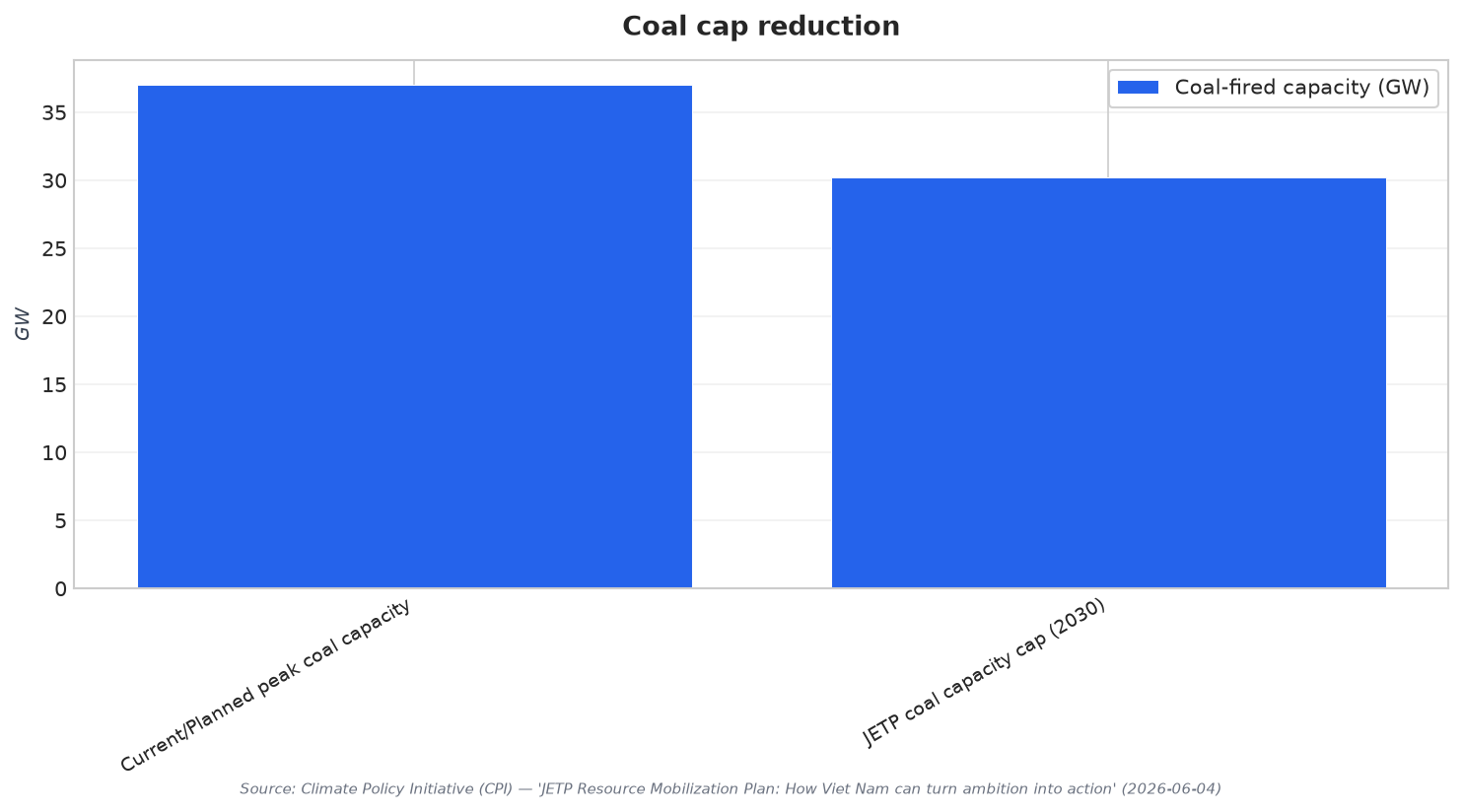
Vietnam’s Just Energy Transition Partnership (JETP) is framed as a pathway to cut coal reliance while protecting energy security. The JETP is valued at USD 15.5 billion and aims to bring forward the projected peak date for greenhouse gas emissions to 2030. It also targets a cap on peak coal capacity of 30.2 GW, down from a planned peak of 37 GW. In the same 2030 window, the JETP aims to accelerate renewables so they account for at least 47% of electricity generation, up from 36%. A Resource Mobilization Plan (RMP) was announced during COP28, and its delivery is explicitly tied to the full realization of international partner commitments.
This shift lands in a power system that is still coal-heavy today, even as renewables have scaled quickly. As of November 2025, Vietnam’s power grid had total installed capacity of 90 GW, with coal-fired generation and hydropower the two dominant sources at 32.7% and 27.8% of capacity. Solar and wind together contributed 26.8%. Meanwhile, solar and wind have grown from a tiny share in the mid-2010s to more than a combined 12% of electricity generation in 2024. These figures show why the coal cap is not a single-policy story. It depends on renewables additions, grid readiness, and how the country manages dispatch and system balancing as variable generation grows.
How Vietnam’s JETP Roadmap Tightens the Rules on Coal
A newly approved national energy transition plan updates Vietnam’s JETP implementation in line with Resolution 70 and the adjusted Power Development Plan VIII (PDP VIII). It sets a timeline for gradual coal phase-out and states that no new coal-fired plants will be built after 2030. It also introduces a retirement trigger for older assets: coal plants that have operated for more than 40 years will be shut down if they cannot be converted to cleaner fuels such as hydrogen or green ammonia, or if they cannot meet national greenhouse gas reduction targets. In the same plan, renewables are projected to account for around 47% of total installed capacity by 2030, while coal power capacity is capped at no more than 31 GW.
Emissions limits provide another hard edge to the transition. The plan targets a ceiling of 170 million tons of CO2 equivalent in the power sector by 2030, with further reductions to around 101 million tons by 2050, and it notes these targets are contingent on international support. CPI’s JETP analysis also contrasts this 2030 power-sector peak of 170 MtCO2e against the 204–254 MtCO2e range pledged in PDP 8 for 2030. That spread highlights the scale of implementation work between policy intent and system realities. It also explains why the RMP is positioned as a practical bridge from ambition to bankable projects.
On the supply side, PDP8 was approved in May 2023 and revised in April 2025, with revisions described as clearing the way for natural gas to replace coal as the primary source of baseload power by 2030. Early LNG deliveries are described as coming via the spot market, with longer-term purchasing contracts presented as a way to make gas-fired power more cost-competitive with coal. Yet delivery is not only about generation. The roadmap includes investments in smart grid infrastructure and transmission systems, and it also proposes two major renewable energy industrial and service hubs. System bottlenecks remain visible: government data cited in market reporting show only 2 of 16 mandated grid projects met 2024 timelines. Against that backdrop, the vietnam coal power phase-out JETP agenda becomes a test of coordinated finance, grid build, and credible rules.
What coal-cap target does Vietnam set under its JETP for 2030?
What does the JETP say about peaking emissions and the power sector by 2030?
How does the vietnam coal power phase-out JETP roadmap treat older coal plants?
What role do renewables play in Vietnam’s 2030 transition plan?
What do Vietnam’s latest planning documents imply about gas versus coal for baseload power?