Vietnam is reinforcing its reputation as the global capital of Robusta at a moment when the category is being re-evaluated. The country is the world’s largest producer of Robusta coffee, contributing over 40% of overall global output, and it exports over 1.5 million metric tons of coffee a year. In 2025, Vietnam’s coffee industry exported a total of $8.92bn, a 58.8% increase compared to 2024, according to comments from Hung Khuat of Nestlé Vietnam. The surge was primarily driven by global Robusta prices, but it also signals a broader shift: coffee is emerging as a key growth engine.
The world context matters because demand remains intense. One report notes that around 80% of the world’s population consumes caffeine in some form daily, mostly from coffee. Around 11 million metric tonnes of coffee is produced annually, and the Western world in particular is described as “hooked.” This backdrop raises the strategic value of Vietnam’s Robusta supply, especially because the country sits near the top of global production. Vietnam is the second largest coffee producer in the world, and only Brazil produces more coffee, averaging 2.68 million metric tonnes each year.
Premiumization Redefines What Robusta Can Be
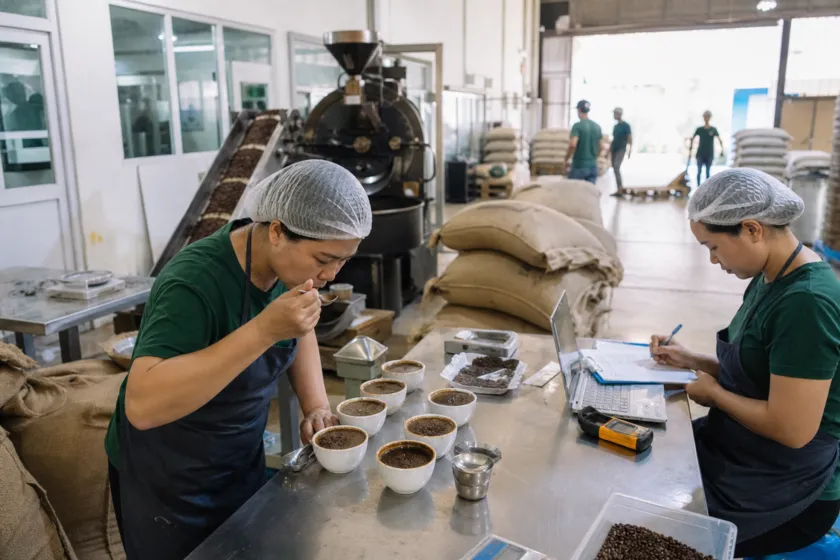
Robusta has long been defined by utility in mass blends. It is known for bitterness and low acidity, which makes it ideal for well-rounded coffee blends sold by manufacturers like Nestlé and found on supermarket shelves around the world. Now, premiumization is widening what buyers and drinkers expect from the bean. Reuters reported that the Specialty Coffee Association (SCA) revised its evaluation course so trained assessors can describe and reward top-notch coffee regardless of species. Reuters also said that, in 2026, the SCA will begin to revise the lexicon of flavor descriptors used by coffee evaluators to include attributes associated with fine robusta, such as aromatic spice.
This broader reframing helps explain why vietnam specialty robusta coffee is increasingly positioned as more than a commodity story. Brands like Nguyen Coffee Supply, offering quality Robusta from Vietnam, were cited by Reuters as having already blazed a path in the U.S., while coffee shops from London to Berlin are showcasing Robusta’s finer qualities. That market pull connects back to Vietnam’s export performance and its importance to global buyers. As Khuat put it, Vietnam is “one of the largest coffee origins for Nestlé,” underscoring how integral Vietnamese supply is to large-scale roasting and manufacturing strategies.
Looking forward, Vietnam’s coffee farmers are expected to face climate change and rising production costs over the next five to ten years, according to Khuat, even as incentives remain strong to invest and modernise to sustain global demand for Robusta. For roasters and manufacturers, that could translate into potential price volatility, tighter sustainability requirements, and the increasing strategic value of long-term farmer partnerships. One possible outcome is more Vietnamese farmers turning to roasting coffee themselves to increase profits, if they are given the right support. In parallel, tourism narratives also reinforce prestige: a Routes profile describes Vietnam’s Robusta beans as both an economic strength and a cultural signature that captivates visitors.
What did Vietnam’s coffee exports earn in 2025, and how fast did revenue grow?
How important is Vietnam to global Robusta supply?
Why are premium buyers paying more attention to high-quality Robusta?
What pressures and changes could shape Vietnam’s specialty Robusta coffee push over the next decade?