Vietnam is positioning itself as a strategic link in the Vietnam battery materials supply chain as global buyers look for alternatives to China’s dominance in critical minerals. The country is home to the world’s sixth-largest reserves of rare earths, a fact that has drawn attention from the European Union, the US, and Australia. At the same time, the key issue is not just mining. It is the ability to refine, process, and build an industrial ecosystem, because supply chain steps can matter as much as the element itself.
Policy is moving in the direction of more domestic value. A new Geology and Mineral Law in 2024 was aimed at improving access to more foreign investors, after complex regulatory hurdles and opaque licensing processes deterred investment. In December, the law was amended to restrict exports of unprocessed rare earth ores, signaling a shift toward higher-value domestic processing. Reuters also reported that Vietnam’s parliament approved a revised law restricting exports of refined rare earths and reaffirming a ban on ore exports, even as the country has “virtually no refining capacity at the moment.”
Rare Earth Ambitions Meet Processing Reality
Vietnam’s rare earth ambitions sit inside a geopolitically charged market. Reuters reported that the US Geological Survey earlier lowered its estimate of Vietnam’s rare earth reserves to 3.5 million metric tonnes from 22 million tonnes. International partners are still positioning for access. In January’s upgrade of ties with the EU, both sides agreed to deepen cooperation, including through promoting sustainable mining and processing technologies, and the EU’s ambassador said the EU is ready to support Vietnam in developing its own independent value chain. The US also highlighted technical cooperation during Joe Biden’s 2023 visit to Hanoi.
Yet the industrial challenge is stark. Fox News Digital reported that “at the time, the world was entirely dependent on Chinese companies to separate their heavy rare earth metals,” underscoring why processing is a bottleneck, not just extraction. The same report described a rare earth technology and project dispute in Hanoi, including a 2023 raid in which laptops and records were seized and 17 employees were arrested, with all but one later released. The episode illustrates how governance, enforcement, and perceived risk can shape whether processing know-how stays, scales, or moves abroad.
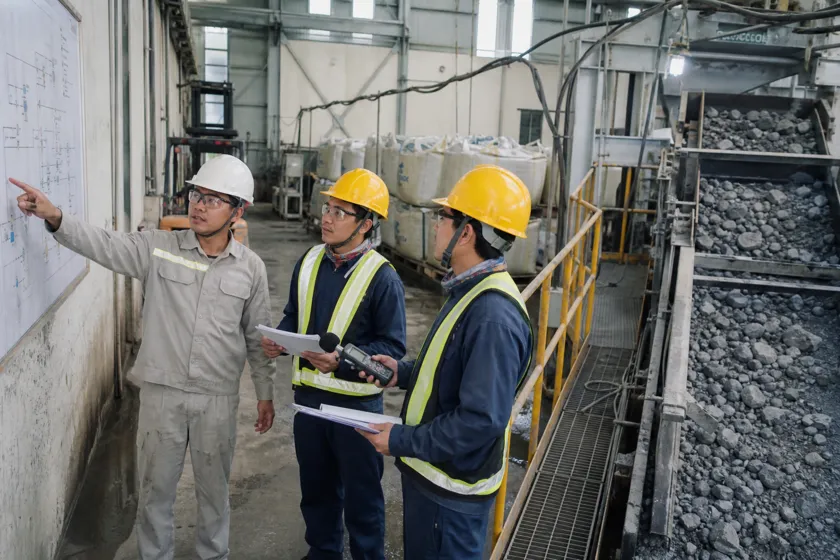
Beyond rare earths, Vietnam’s mining-to-materials play includes industrial minerals linked to lithium-ion batteries. Masan High-Tech’s mine produces fluorspar, which is used in lithium-ion batteries, along with bismuth and copper. Vietnam’s Nui Phao mineral complex has four main outputs: tungsten, fluorspar, bismuth, and copper, and its tungsten products are processed through a closed-loop chain to create ammonium paratungstate (APT) and tungsten oxide used across high-tech industries. The Investor reported Nui Phao ranks fifth globally in fluorspar output, according to the US Geological Survey, supporting a wider materials ecosystem even as lithium and nickel supply chains remain globally tight and processing-dependent.
What is Vietnam doing to move up the battery materials value chain?
How large are Vietnam’s rare earth reserves according to the latest Reuters-cited update?
Why does processing matter as much as mining for rare earths?
Which partners are seeking closer ties on Vietnam’s critical materials?
What does the Vietnam battery materials supply chain story reveal about investment risk?