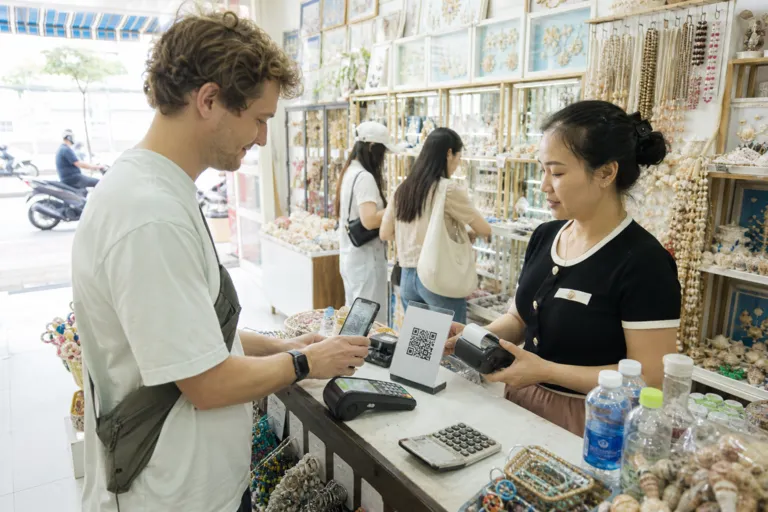
Vietnam’s next payments experiment is taking shape in tourism and everyday retail. A joint analysis cited by Vietnam Investment Review says Danang is preparing to pilot the use of digital currencies in everyday payments to assess their impact on Vietnam’s financial ecosystem. The same piece frames a “banh mi purchase at Han Market in Danang” as a potential first real test of stablecoins in daily transactions. It also describes a USDT pilot for foreign tourists as part of a wider pattern: using stablecoins as settlement rails without formally redefining crypto as money. For businesses serving visitors, the practical appeal is clear: a familiar, digital checkout experience that fits how travelers already pay.
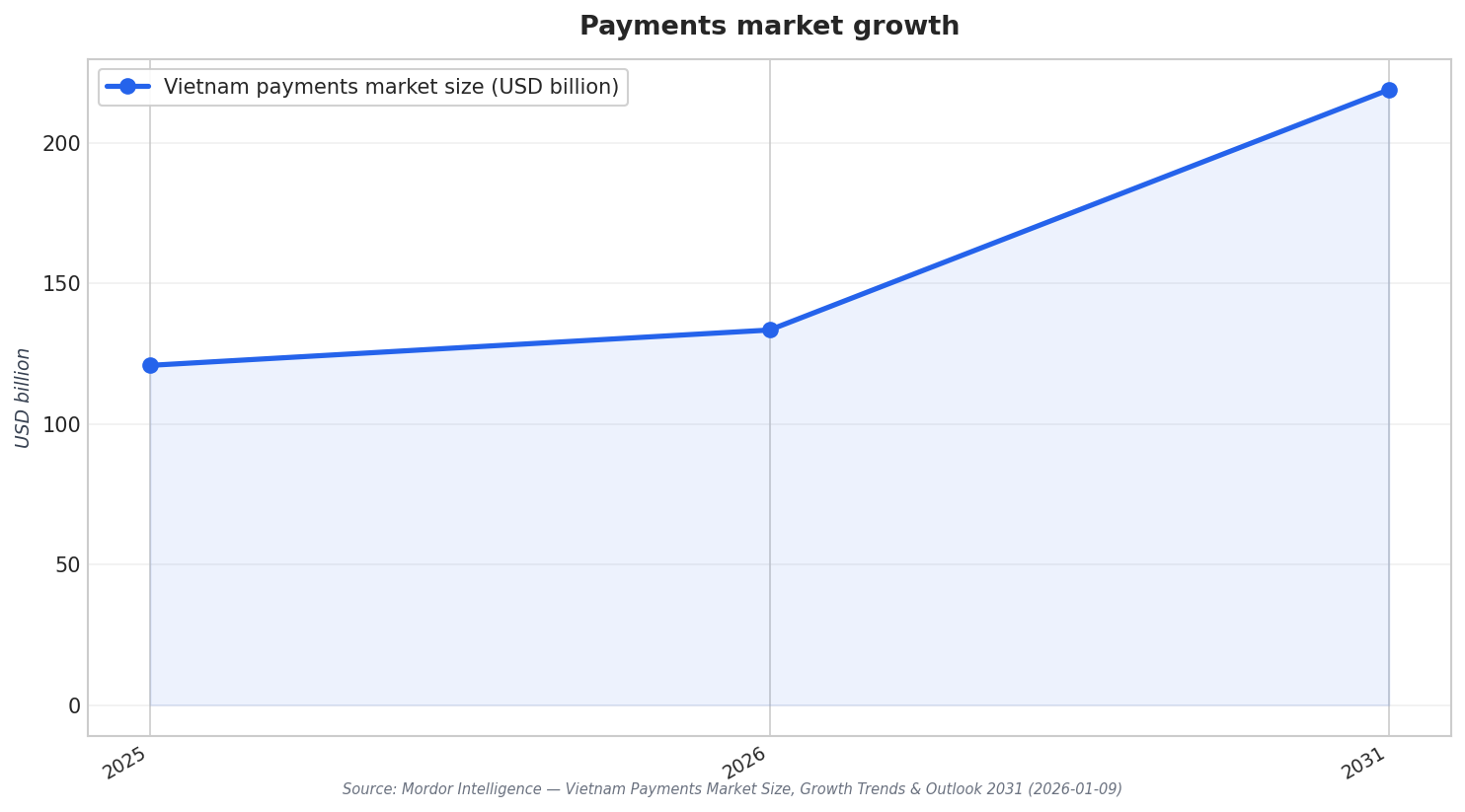
That experiment arrives as Vietnam’s broader payments engine keeps accelerating. Mordor Intelligence forecasts the Vietnam payment market to grow from USD 120.78 billion in 2025 to USD 133.35 billion in 2026, reaching USD 218.8 billion by 2031 at a 10.41% CAGR over 2026–2031. In 2025, digital wallets led with 36.12% market share, while account-to-account transfers are projected to advance at an 11.64% CAGR through 2031. Policy goals are also explicit. Mordor reports a sustained push by the State Bank of Vietnam to achieve 80% cashless transactions by 2030, aligning the ecosystem around faster rails and more digital acceptance points—useful groundwork if a vietnam stablecoin payment pilot needs to run alongside existing wallet and QR habits.
Why Tourists Are a Natural Test Case for Digital-Currency Checkout
Tourism creates immediate demand for international payment acceptance, and Vietnam’s payment industry has been tracking that shift. Verified Market Research notes that hospitality benefits from the recovery of the tourism industry, boosting demand for international card and multi currency payment acceptance. It also reports that Vietnam received 5.8 million foreign tourists in 2022, a 479% increase over 2021, which increased demand for currency exchange services and international payment solutions. In that context, a stablecoin settlement pilot can be framed as an additional option rather than a replacement, especially if merchants already use digital tools. The Vietnam Investment Review analysis positions Vietnam’s approach as strategic experimentation, not an instant change in legal tender status.
Vietnam’s mobile and QR ecosystem provides the practical rails for any tourist-facing trial. Mordor Intelligence reports that Circular 25/2025, effective April 2025, eliminated QR-transaction fees for purchases below VND 500,000, removing a barrier for small merchants. It also states that the National Public Service Portal hosts 3,800 administrative services payable via MoMo, ZaloPay, and ViettelPay, and that this digitization has shifted 96% of tax payments to electronic channels. On the commerce side, Vietnam’s e-commerce value reached USD 20.5 billion in 2024, with 70% of checkouts initiated on mobile devices. These figures signal how normalized scanning, tapping, and in-app paying have become—conditions that can make a tourist pilot operationally realistic for both vendors and payment providers.
Stablecoin-style payments also sit inside a country with visible digital-asset activity, even as payment legality remains constrained. Fireblocks writes that Vietnam ranked 4th globally in Chainalysis’s 2025 Global Crypto Adoption Index, behind only India, the United States, and Pakistan. The same source estimates 17 million Vietnamese (one in every six) own crypto and annual transaction volumes are estimated at USD 230B. Separately, Transfi states that stablecoins are not recognized as a legal means of payment under Vietnamese law and that the State Bank of Vietnam forbids using cryptocurrencies as legal tender, while owning and trading cryptocurrencies is legal. Taken together, a controlled tourist trial can be read as a narrow, regulated step that tests settlement technology and consumer behavior while broader rules continue to develop.
What is Vietnam testing with the stablecoin-style tourist payments pilot?
How fast is Vietnam’s payments market expected to grow?
What payment methods lead Vietnam’s market today?
Why does tourism matter for new payment experiments in Vietnam?
Are stablecoins legal for domestic payments in Vietnam?