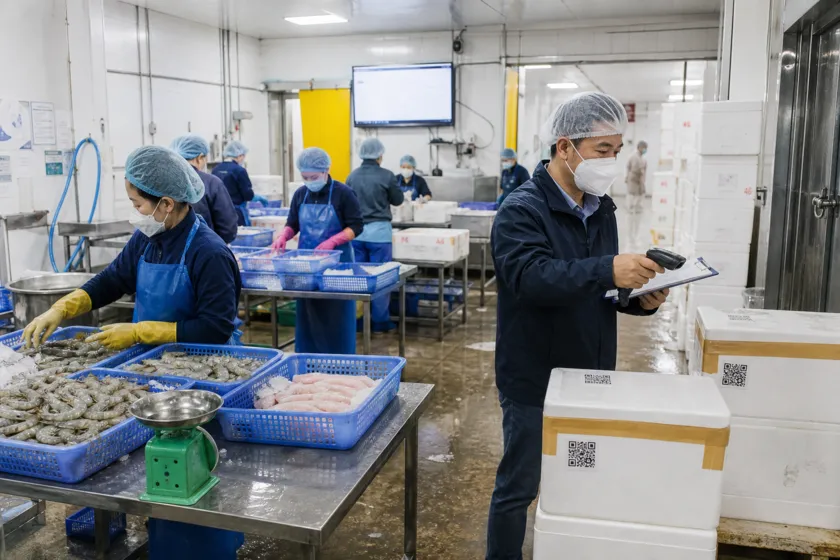
Vietnam’s aquaculture export story is starting 2026 with fresh momentum in shrimp. In the first quarter, shrimp export volumes rose 11.4% year-on-year to 66,890 metric tonnes. Export value increased 8.7% to USD 534.4 million. China drove much of the growth, with demand for Vietnamese shrimp up 42.4% year-on-year over the quarter. China also represented 19% of Vietnam’s total shrimp exports in Q1. These figures matter when discussing Vietnam aquaculture exports and the EUDR because stronger shipments put more pressure on documentation, supplier controls, and consistent market access across different buyer requirements.
March data highlights how quickly trade flows can shift, and why compliance systems must scale with them. Vietnam’s shrimp shipments to China in March climbed from 2,639 metric tonnes last year to 5,724 metric tonnes, a 46.1% increase. When volumes jump that fast, exporters and processors must keep product identity and records tight, especially when multiple markets apply different verification styles. The broader seafood supply chain is also dealing with heightened scrutiny in other regions. In the United States, the FDA issued warning letters to two seafood companies for Hazard Analysis and Critical Control Point (HACCP) violations, including import verification failures, showing how compliance gaps can trigger enforcement risk.
What the EUDR Timeline Changes Signal for Export Planning
EUDR implementation planning has also been shaped by shifting timelines and obligations. A legal analysis noted that companies preparing for end-2025 implementation faced uncertainty after an implementation delay was discussed, and that it cannot be predicted with certainty how the situation will develop. It also described proposed changes aligned between the Parliament’s position and the Council’s proposal adopted on 19 November, including removing a grace period for sanctions and enforcement originally proposed by the European Commission. The same analysis stated that a due diligence statement would remain the obligation on operators first placing the product on the market, while downstream operators and traders would no longer be required to submit separate due diligence statements, and micro and small operators would have a one-off simplified declaration.
For Vietnam’s shrimp and pangasius export outlook, these details affect how responsibilities could be distributed between EU importers and their suppliers. Exporters will still be asked for supporting evidence by buyers who must submit due diligence statements, especially if enforcement starts without a grace period. Pangasius is central to Vietnam’s aquaculture identity in global markets, with one source describing Vietnam as producing 1.75 million tons per year and dominating the global pangasius (catfish) market with industrial production on a gigantic scale. Even when the formal obligation sits with EU market operators, exporters that can package consistent supplier information and clear product documentation are easier to buy from.
Traceability expectations are also reinforced by how quickly regulators can add new requirements after an incident. Reuters reported the U.S. FDA announced new import certification requirements for shrimp and spices from Indonesia after cases of radioactive contamination were detected, with requirements starting on October 31, 2025 for certain regions. Separately, an investment-focused supply chain article noted that industry responses include using AI and blockchain to enhance traceability and compliance, and that diversification is being explored, including partnerships with shrimp producers in Vietnam. In practice, Vietnam’s exporters can treat EUDR-facing requests as part of a broader trend: buyers want evidence-ready supply chains that can withstand sudden rule changes and tighter import checks.
What do Q1 shrimp export results suggest for Vietnam aquaculture exports and EUDR readiness?
How important was China to Vietnam’s shrimp export rebound?
What EUDR compliance change could affect how exporters interact with EU buyers?
What does the cited pangasius production figure indicate about Vietnam’s export stakes?
Why are seafood exporters paying more attention to traceability tools?