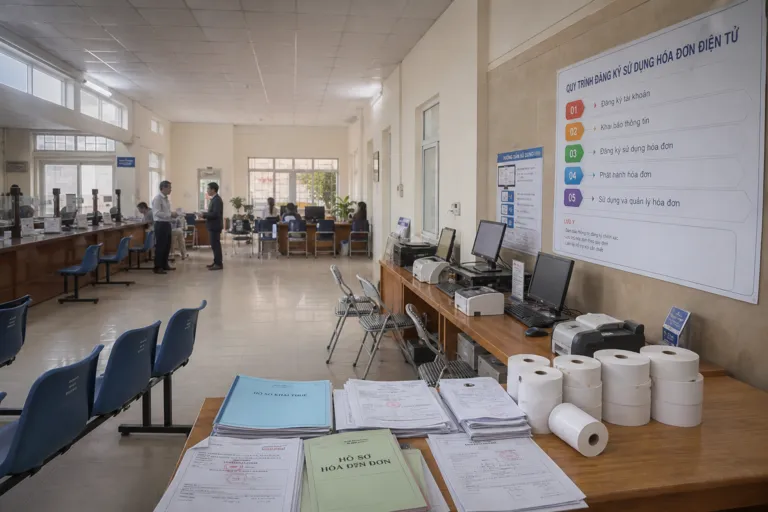
Vietnam’s household-business reform is reshaping how small retailers register sales, issue invoices, and calculate obligations. The core shift is simple: the long-standing lump-sum method—where tax authorities set a fixed annual revenue level—will be replaced by self-declaration and self-payment from January 1, 2026. Resolution 68-NQ/TW called for abolishing the lump-sum method no later than 2026, and Resolution 198/2025/QH15 specifies that household and individual businesses will not apply the lump-sum method from January 1, 2026. Viet An Law notes Vietnam has over 5.2 million business households, with state budget revenue from this group estimated at about 26,000 billion VND in 2024, showing why policymakers are prioritizing clearer, more data-based administration.
The declared goal is modernization and fairness, not simply stricter enforcement. Vietnam News reports the Ministry of Finance approved a comprehensive plan to end the regime and move all business households nationwide to self-declaration from January 1, 2026. The ministry also aims to simplify procedures, accelerate digital transformation, and cut compliance costs by at least 30 per cent. It plans revisions to legal frameworks, including proposed amendments related to the Law on Tax Management and updates to personal income tax and VAT rules, especially for households operating at a scale similar to SMEs. For households that maintain proper accounting records, personal income tax may be calculated on net income, aligning tax with more transparent business practice.
Digital Tools and E-Invoices Are Becoming the New Retail Standard
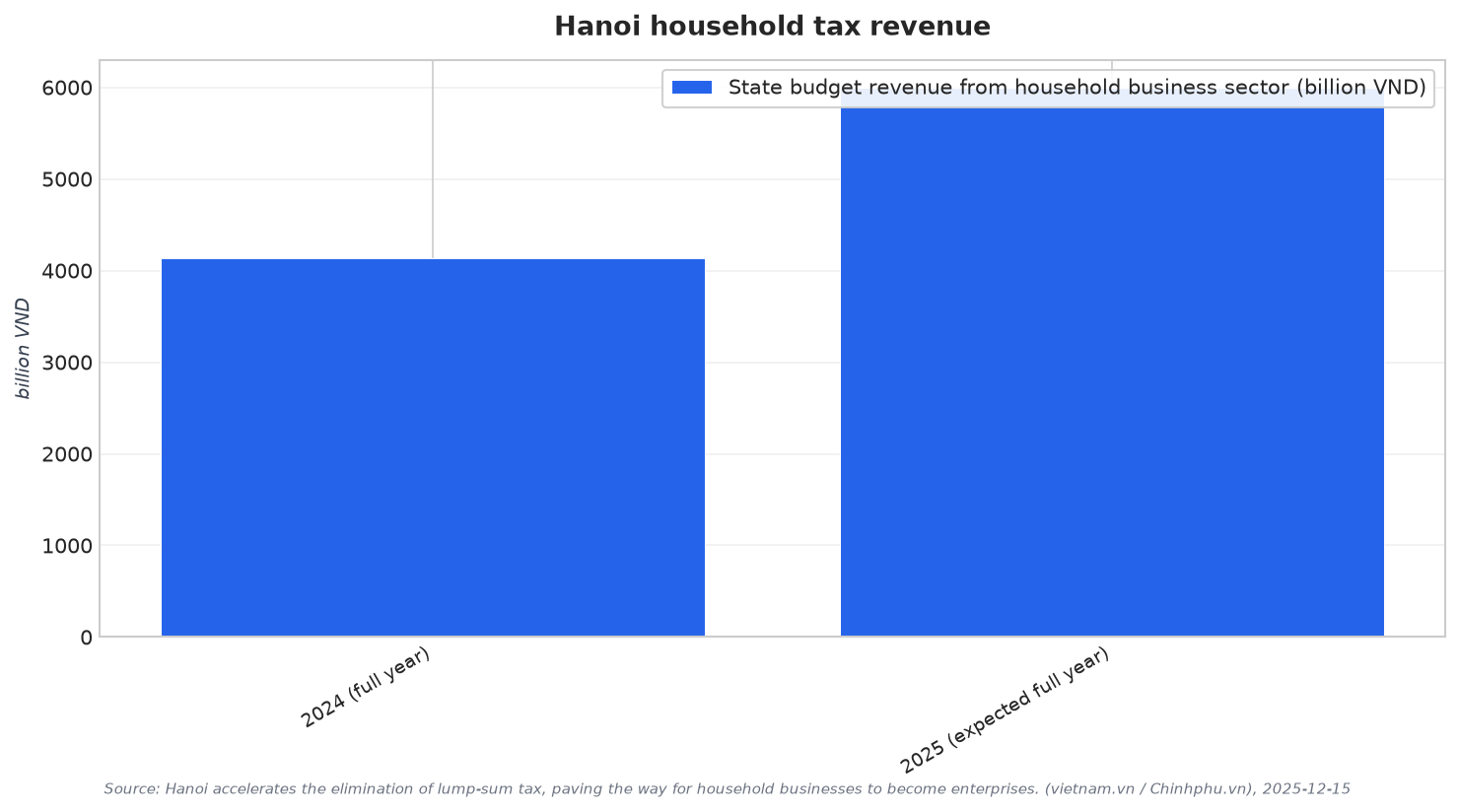
Local implementation shows how digital infrastructure supports formalization. Hanoi describes the final phase of eliminating lump-sum tax as part of a shift from manual management to digital management based on centralized data, targeting readiness from January 1, 2026. In Project 06 work, Hanoi reported a matching rate of over 99.8% between tax identification numbers and Ministry of Public Security data, with 7.1 million tax identification numbers correctly matched. Hanoi also reported that in the first 10 months of 2025, revenue from the household business sector reached VND 5,099 billion, and is expected to reach about VND 6,000 billion for the year, a 45% increase compared to 2024. On e-commerce, Hanoi placed 154,708 organizations, businesses, household businesses, and individuals under monitoring, and projected total budget revenue from that sector in 2025 at 36.3 trillion VND.
Other localities are pairing rule changes with hands-on support. In Da Nang, the tax sector launched a “60-day intensive support” campaign to help household businesses transition from lump-sum tax to declaration-based tax. By the end of 2025, Da Nang had more than 7,500 businesses registered to use electronic invoices from cash registers, and reported the number of household businesses reached 204% of the target, with an actual invoice usage rate of about 98%. At the national level, Vietnam News notes that household businesses required to use e-invoices generated from cash registers under Decree 70/2025 must complete registration before the new model takes effect. Together, these steps push everyday retail transactions toward traceable documentation and routine declaration.
Policy changes also reshape who pays and how much, which matters for small shops. Viet An Law says the business license fee will be abolished from January 1, 2026, so household businesses will pay VAT and personal income tax. Thresholds are also being reset in different documents: Vietnam News describes a plan that exempts households with annual revenue under VNĐ200 million from VAT and personal income tax, and says these smaller operators are estimated to account for more than 65 per cent of all business households, though they must declare twice per year. Separately, a Lam Dong-focused update says that with a 500 million VND threshold, it is expected around 70% of small and medium-sized households in Lam Dong—especially in tourism, services, and small-scale retail—will be completely exempt from tax. The overall direction is consistent: clearer thresholds, more declarations tied to real activity, and a stronger on-ramp from informal retail to more enterprise-like practices.
When will Vietnam abolish the lump-sum tax method for household businesses?
What taxes will household businesses pay after the business license fee is removed?
How is tax digitalization supporting the shift away from lump-sum taxation in Hanoi?
What does the reform mean for the Vietnam household business tax approach in retail?
What progress has Da Nang reported on e-invoices from cash registers?