Vietnam’s shift from imaging AI pilots to routine hospital use is being shaped by two forces that meet in the workflow: demand for earlier detection and the requirement to digitize hospital information systems. Ken Research values the Vietnam medical image analysis software market at USD 160 million, attributing growth to advanced imaging technologies, rising healthcare expenditure, and emphasis on early disease detection and diagnosis. In this setting, AI is not only about image recognition. It is increasingly judged by how smoothly it supports diagnostic accuracy and efficiency in real clinical environments, especially where imaging volumes and decision timelines pressure radiology teams.
Hospital-readiness also depends on where infrastructure is strongest. Ken Research notes that Ho Chi Minh City and Hanoi dominate Vietnam’s medical image analysis software market due to advanced healthcare infrastructure and a concentration of medical facilities. These centers host numerous hospitals and diagnostic centers that are investing in state-of-the-art imaging technologies, which increases demand for analysis software that can sit alongside daily operations. This favors tools that help clinicians act earlier across specialties, including segments Ken Research lists such as neurology, cardiology, oncology, and more. Oncology is described as leading among applications, linked to the need for precise imaging techniques for diagnosis and treatment planning.
From Stand-Alone Tools to Integrated Hospital Systems
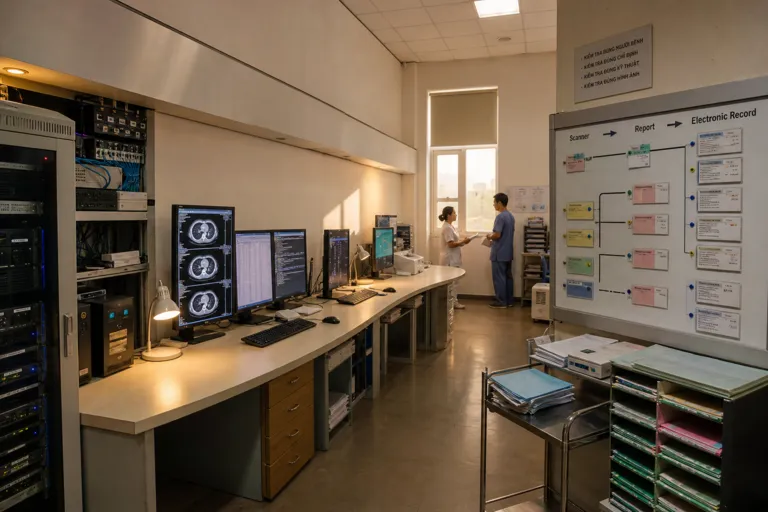
Moving beyond pilots often comes down to integration. In Vietnam, Circular 54/2017/TT-BYT (issued in 2017 by the Ministry of Health) mandates the application of information technology in hospital management, including integrating medical imaging software as part of electronic health record systems. Ken Research describes requirements for hospitals to implement digital systems for patient data management, including imaging results, and emphasizes interoperability so healthcare professionals can access comprehensive patient data. That regulatory direction aligns with a product-level market shift Ken Research observes: integrated software is increasingly preferred because it provides a more comprehensive solution and improves workflow efficiency compared with stand-alone software used for narrow tasks.
Vietnam’s broader healthcare AI buildout adds more momentum toward operational use. Ken Research values the Vietnam Healthcare Generative AI Market at USD 20 million, and links growth to digitalization such as electronic medical records, telemedicine, and AI-powered diagnostic tools. It also points to adoption across public and private sectors, including imaging, hospital management, and clinical decision support systems. The same source highlights local players and ecosystem builders, including VinBrain (backed by Vingroup) and its DrAid™ platform, along with FPT Corporation scaling AI infrastructure and digital health solutions, and TMA Solutions contributing through EHR and telehealth platforms. In 2024, Vietnam’s government announced a strategic plan to enhance domestic healthcare capabilities through AI, including directives for electronic medical records and AI-supported diagnostics.
Global market dynamics explain why hospitals increasingly insist on workflow fit before scaling. Grand View Research values the global AI in medical imaging market at USD 1.8 billion in 2025 and projects growth from USD 2.5 billion in 2026 to USD 20.2 billion by 2033 (35.1% CAGR, 2026–2033). Other research cited here forecasts similar acceleration, with Towards Healthcare projecting expansion from USD 2.41 billion in 2026 to USD 35.46 billion by 2035 (34.8% CAGR, 2026–2035), and Fortune Business Insights projecting USD 2.43 billion in 2026 to USD 29.95 billion by 2034 (36.91% CAGR). For Vietnam AI medical imaging decisions, these global signals matter mainly as context: they reinforce that the winning products will be those that hospitals can procure, secure, and run inside PACS, radiology information systems, and connected clinical communication workflows—rather than isolated pilots that never become routine.
What is driving Vietnam’s move from imaging AI pilots to routine workflow use?
How large is Vietnam’s medical image analysis software market, according to the sources?
Why do integrated imaging software platforms matter more than stand-alone tools?
Which cities are highlighted as leaders in Vietnam’s imaging software adoption?
What market context helps explain hospital interest in workflow-based imaging AI?