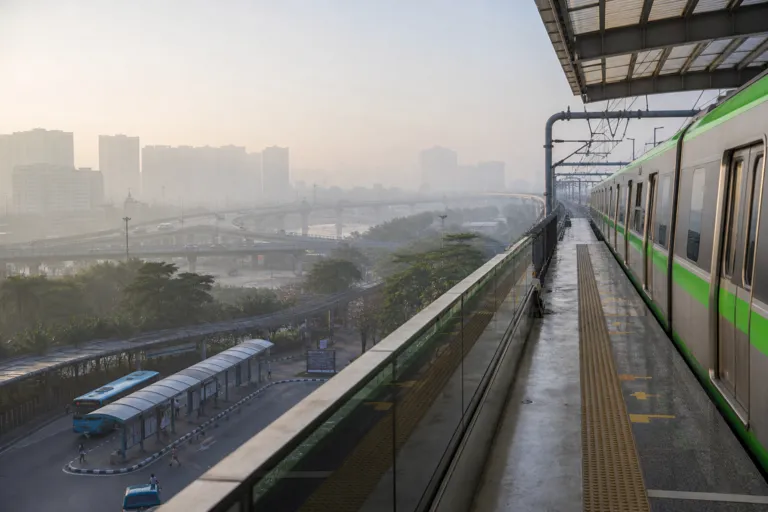
Early signals from Vietnam’s first operational rapid transit systems are already shaping how investors, policymakers, and mobility operators think about metro economics. In Hanoi, the system is described as the first operational rapid transit system in Vietnam, owned by Hanoi’s People Committee and operated by Hanoi Metro Company. Wikipedia notes that upon opening, daily ridership was 12,000, a baseline that can be used to discuss ramp-up dynamics without assuming later totals. Hanoi’s planning ambition is also clearly stated: the system is projected to have 18 lines with a total length of 979 kilometres by 2045, framing a long runway where operating experience and ridership conversion matter.
Recent reporting also suggests that demand can respond quickly to household cost pressure. A March 2026 report says Hanoi Metro Company Limited observed ridership on the city’s two lines—Cat Linh–Ha Dong (Line 2A) and Nhon–Ha Noi Station (Line 3.1)—increasing notably as rising fuel prices pushed more people toward public transport. The same report adds that data from the operator of Metro Line 1 Ben Thanh–Suoi Tien show ridership steadily increasing throughout the week, particularly among younger commuters. That type of weekly pattern is an economics clue: even without publishing totals, it indicates repeat usage, commuter relevance, and a cohort effect that can influence long-run fare and service planning.
Where Ridership Economics Meets Payments, Access, and Competing Modes
Fares are only one part of the adoption story. The March 2026 report says the company introduced smart ticket gates integrating electronic authentication and biometric technology, enabling payment via the Hanoi Metro app, international Visa cards, e-wallets, and selected domestic banking services. Ho Chi Minh City’s metro authority is also described as having introduced a smart card for use on the Ho Chi Minh City Metro. These details matter for early ridership economics because friction in entry, queuing, and payment can shape conversion from other modes. In plain terms, making it easy to pay is part of making it easy to ride, especially for commuters making frequent trips.
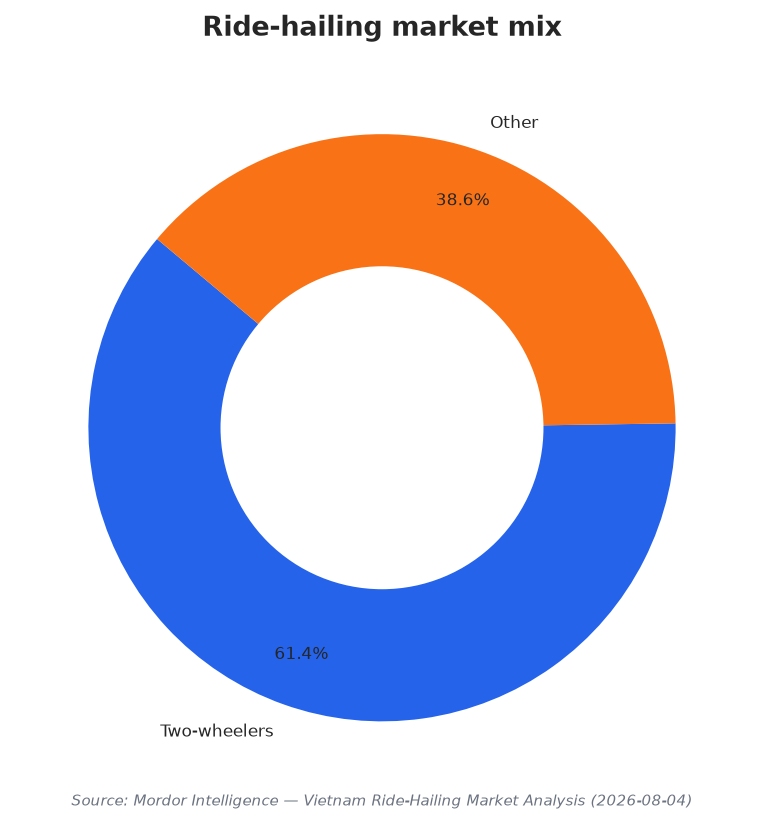
Metro ridership is also influenced by the wider mobility market that competes for the same short urban trips. Mordor Intelligence valued Vietnam’s ride-hailing market at USD 1.25 billion in 2026 and estimated growth from USD 1.49 billion in 2027 to USD 3.57 billion by 2032, at a CAGR of 19.08% for 2027–2032. In that 2026 snapshot, two-wheelers held a 61.35% share, and app-based booking held an 89.12% share, indicating how digitally mediated, low-friction travel already is for many riders. The same source explicitly notes that metro connections in Hanoi and Ho Chi Minh City offer trip opportunities, which positions rail not only as a competitor but also as a trip generator for feeder and last-mile services.
Finally, delivery and governance determine whether early demand can be captured sustainably. A 2026 Frontiers study on public-private partnerships for Vietnam metro projects identified 24 critical factors, ranking “Management ability of public sector” highest with a mean value of 4.24, while “Stable political and social environment” ranked lowest with an importance score of 3.71. The study found five contributing groups to success, with “Legal” factors having the strongest impact, followed by “Scope, technology, and construction,” then “Finance,” and then “Politics, socio-economic and business environment,” while “Risk” factors were believed to have the weakest impact. Taken together with early usage signals, the lesson is that vietnam urban metro ridership is not just a passenger metric; it is tied to payment design, multimodal connections, and the institutional capacity to deliver projects that people can reliably use.
What early ridership figure is reported for Hanoi’s metro at opening?
What does early Vietnam urban metro ridership suggest about commuter behavior?
How are Hanoi’s metro payments being modernized?
Why does ride-hailing matter to metro economics in Vietnam?
Which PPP factor ranked highest for Vietnam metro projects in the 2026 study?