Northern Vietnam’s logistics picture is changing fast. In Vietnam, domestic parcel volumes jumped 45% in 2024 as online marketplaces expanded, while courier networks used automated sorters and AI route engines to shrink average delivery windows from 48 to 24 hours. At the same time, manufacturing logistics demand rose 28% in 2024 as electronics and apparel relocations from China increased throughput. These trends matter for air-linked supply chains because northern electronics flows often prefer airfreight. At Noi Bai Airport, component uplift climbed 35% year-over-year, a signal of strain that is already forcing capacity additions and slot reprioritization.
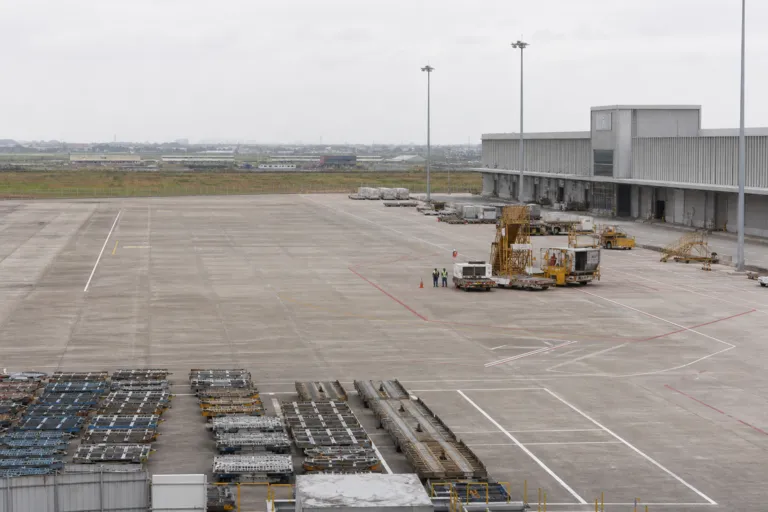
Against that backdrop, Gia Binh Airport is being framed as a new lever for both aviation capacity and logistics restructuring. A report on the project describes a planned area of nearly 2,000 hectares and 4 international-standard runways, with an aim to create synergy that alleviates pressure on Noi Bai. The same source links the airport to a next-generation Free Trade Zone intended to form a faster trade gateway and drive high-value industrial growth in the Northern region. It also argues that a large-scale airport can catalyze nearby logistics hubs, aviation services, and commercial urban complexes, aligning with Bac Ninh’s high-tech industrial orientation.
Why a Second Gateway Could Rewire Cargo Flows
The logic for a second gateway becomes clearer when you connect airport plans to freight fundamentals. Northern Vietnam hosts what one source calls the nation’s largest electronics manufacturing cluster, naming Samsung, Foxconn, and Canon. Mordor Intelligence also notes Samsung’s expansion alone requires 2,400 TEU moves monthly, while Foxconn and Luxshare operate closed-loop corridors to export gateways. When air cargo demand persistently outpaces capacity, manufacturers face higher warehousing costs and pressure on connecting transport networks, contributing to localized congestion and higher logistics costs. A new airport node in Bac Ninh could change how time-sensitive components and finished goods are routed.
Policy and market momentum add to the case that new infrastructure can reshape service networks. The ASEAN single-window rollout cut border paperwork by 30% and enabled 95% electronic submissions by 2024, and the Dong Dang–Pingxiang crossing is cited as trimming clearance to three hours. Meanwhile, Vietnam’s logistics market reached USD 85.81 Billion in 2025 and is projected to grow at a CAGR of 6.40%, reaching USD 159.57 Billion by 2035. In that growth context, Gia Binh Airport could become another anchor point for the Red River Delta’s logistics role around Hanoi and Haiphong, rather than concentrating pressure on one primary gateway.
Hanoi’s broader aviation network strategy also points to multi-node logistics clustering. VietnamPlus reports a proposed second international airport in Ung Hoa commune expected to cover around 1,500ha and handle between 30 and 50 million passengers annually, while positioning the city for logistics, innovation, science and technology industries, and a low-altitude economy involving drones, autonomous aircraft, and urban air mobility systems. In that framework, the eastern growth pole is explicitly linked to Gia Binh International Airport. Put together, the case for gia binh airport is not only about flights; it is about where warehouses, consolidation points, and higher-value services choose to locate as the North’s networks mature.
What is planned for Gia Binh Airport’s scale and facilities?
Why is air cargo capacity such a pressing issue in northern Vietnam?
How could a new airport change logistics clustering in Bac Ninh and nearby provinces?
What wider logistics trends support investment in new gateways?
How is Hanoi linking airport development to long-term growth poles?